Blog Search
Why Interest Rates Are the Real Boss of Canada’s Housing Market?

If you follow Canadian real estate news, you’ve probably heard headlines about the Bank of Canada raising or lowering interest rates. Most people treat those announcements like background noise.
But interest rates quietly shape almost everything in the housing market: home prices, mortgage payments, buyer demand, competition, and even how long homes sit on the market.
Understanding rates is one of the simplest ways to understand how Canadian real estate actually works.
First, What’s the Difference Between a Policy Rate and a Mortgage Rate?
The Bank of Canada sets the policy rate, also called the overnight rate. This is the benchmark rate banks use when lending money to each other.
Commercial banks then use that benchmark to decide the mortgage rates they offer customers.
So, while the Bank of Canada doesn’t directly set your mortgage rate, it heavily influences it.
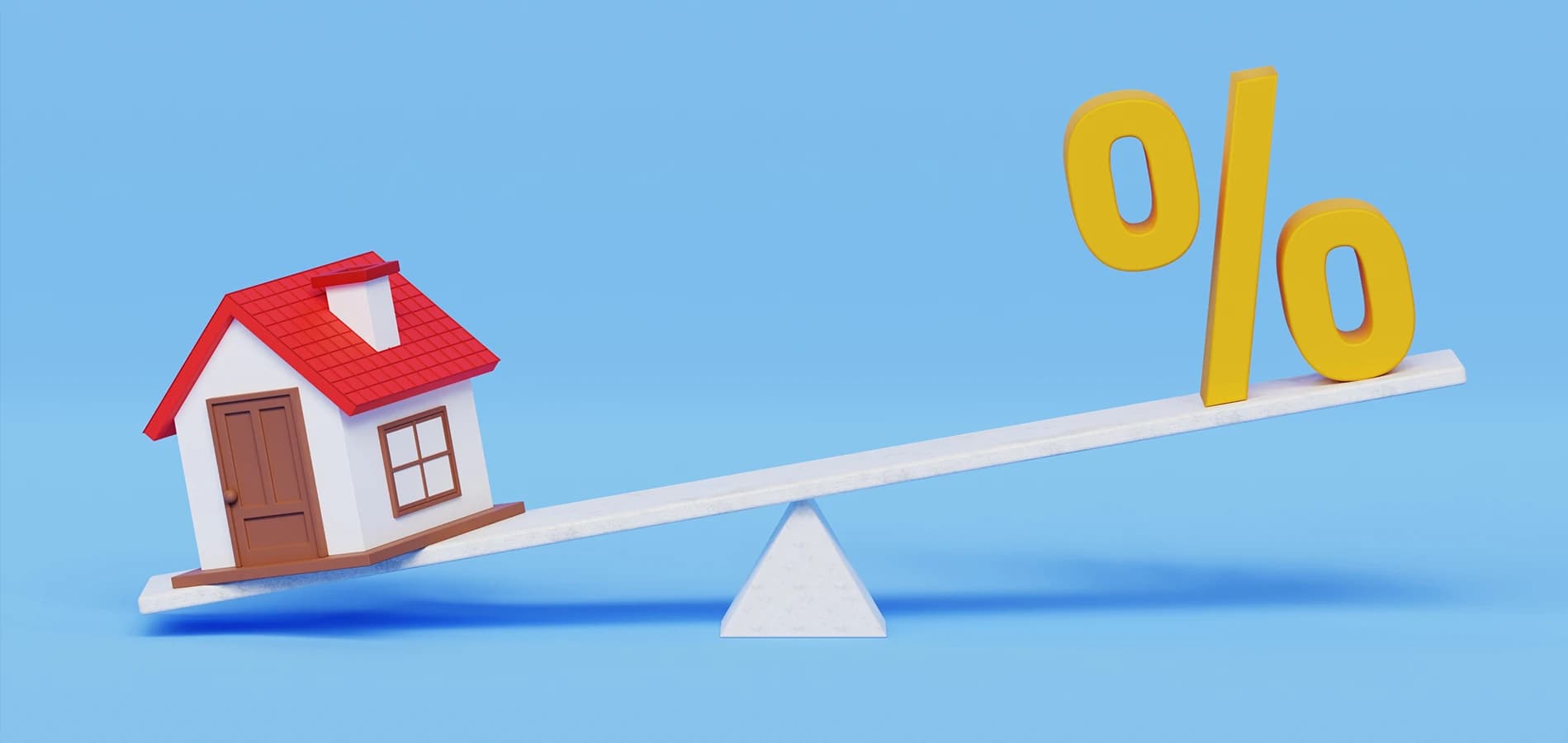
And that matters because even a small rate change can dramatically affect affordability.
When rates rise:
- Monthly mortgage payments increase
- Buyers qualify for smaller loans
- Demand slows down
When rates fall:
- Borrowing becomes cheaper
- Buyers qualify for larger mortgages
- More people enter the market
That single shift changes the behaviour of millions of buyers and sellers across Canada.
Why Does the Bank of Canada Change Rates?
The biggest reason is inflation.
When the cost of goods and services rises too quickly, the Bank raises rates to slow spending and cool the economy. When inflation eases or the economy weakens, rates may fall to encourage borrowing and investment.
Other factors also influence decisions:
- Employment and economic growth
- Consumer spending
- Housing market activity
- U.S. economic conditions and global events
Canada’s housing market doesn’t move in isolation. It reacts to the broader economy.
Where Rates Hit Hardest: Affordability
This is where things become personal.
Interest rates directly affect how much home buyers can afford. A buyer who qualifies for a $700,000 mortgage at a lower rate may only qualify for around $600,000 after rates rise.
Same income. Same job. Smaller borrowing power.
Now multiply that across thousands of buyers in cities like Toronto, Vancouver, and Calgary. That’s how rates can reshape an entire market almost overnight.
Home prices often follow affordability more than anything else.
How Buyers React to Interest Rates
Buyer behaviour changes quickly when borrowing costs shift.
When rates rise:
- Many buyers pause their search
- Some get priced out completely
- Competition slows
- Homes take longer to sell
When rates fall:
- More buyers re-enter the market
- Competition increases
- Multiple-offer situations become more common
- Prices often rise faster
This is why low-rate environments usually create aggressive housing markets, while high-rate periods tend to cool them down.
Why Home Prices Rise and Fall
Many people think home prices move randomly. In reality, prices are heavily tied to borrowing power.
Low rates increase affordability, which increases demand. More buyers competing for limited homes pushes prices upward.
High rates reduce affordability, which lowers demand and slows price growth.
Canada saw this clearly between 2020 and 2022, when historically low rates helped fuel rapid price growth. Once rates climbed sharply afterward, the market corrected.
Prices didn’t move on their own. Affordability changed first.
What Interest Rates Mean for Sellers
Rates affect sellers just as much as buyers.
In higher-rate markets:
- Buyer activity slows
- Listings stay active longer
- Sellers may need to reduce prices
- Negotiation becomes more common
In lower-rate markets:
- Homes sell faster
- Inventory tightens
- Sellers gain stronger leverage
This is often what creates a buyer’s market or seller’s market.

Understanding the Housing Cycle
Canadian real estate tends to move in cycles that closely follow interest rates:
- Rates fall
Borrowing becomes cheaper. - Buyer demand increases
Competition rises and prices climb. - Affordability stretches
The market overheats. - Rates rise
Borrowing becomes more expensive. - Demand slows
Prices stabilize or decline.
No cycle is identical, but this pattern has repeated throughout Canadian housing history.
Where the Market Stands in 2026
Compared to the extreme volatility of recent years, Canada’s housing market in 2026 appears more balanced.
In many regions:
- Interest rates have stabilized
- Inventory levels are improving
- Competition has eased
- Buyers have more negotiating power
For buyers, this can create better opportunities and less pressure than during the peak frenzy years.
For sellers, strategy matters more than ever. Pricing, presentation, and marketing now play a bigger role than pure market momentum.
Stop Trying to Time the Perfect Market
One of the biggest mistakes buyers make is waiting for the “perfect” moment to buy.
The reality is nobody consistently predicts the bottom of the market or the exact moment rates will fall.
What matters more is:
- Financial readiness
- Long-term plans
- Understanding the current market conditions
Canadian real estate has historically rewarded people who buy based on their life situation, not headlines.
Final Thoughts
Interest rates are the backbone of Canada’s housing market. They influence affordability, buyer demand, home prices, and overall market momentum.
You don’t need to become an economist to understand real estate. But understanding how rates affect affordability gives you a much clearer picture of why the market behaves the way it does.
And in a market filled with noise, that knowledge alone puts you ahead of most people.


Blog Search
Popular Blogs
Popular Blogs
The trademarks MLS®, Multiple Listing Service® and the associated logos identify professional services rendered by REALTOR® members of CREA to effect the purchase, sale and lease of real estate as part of a cooperative selling system.