Blog Search
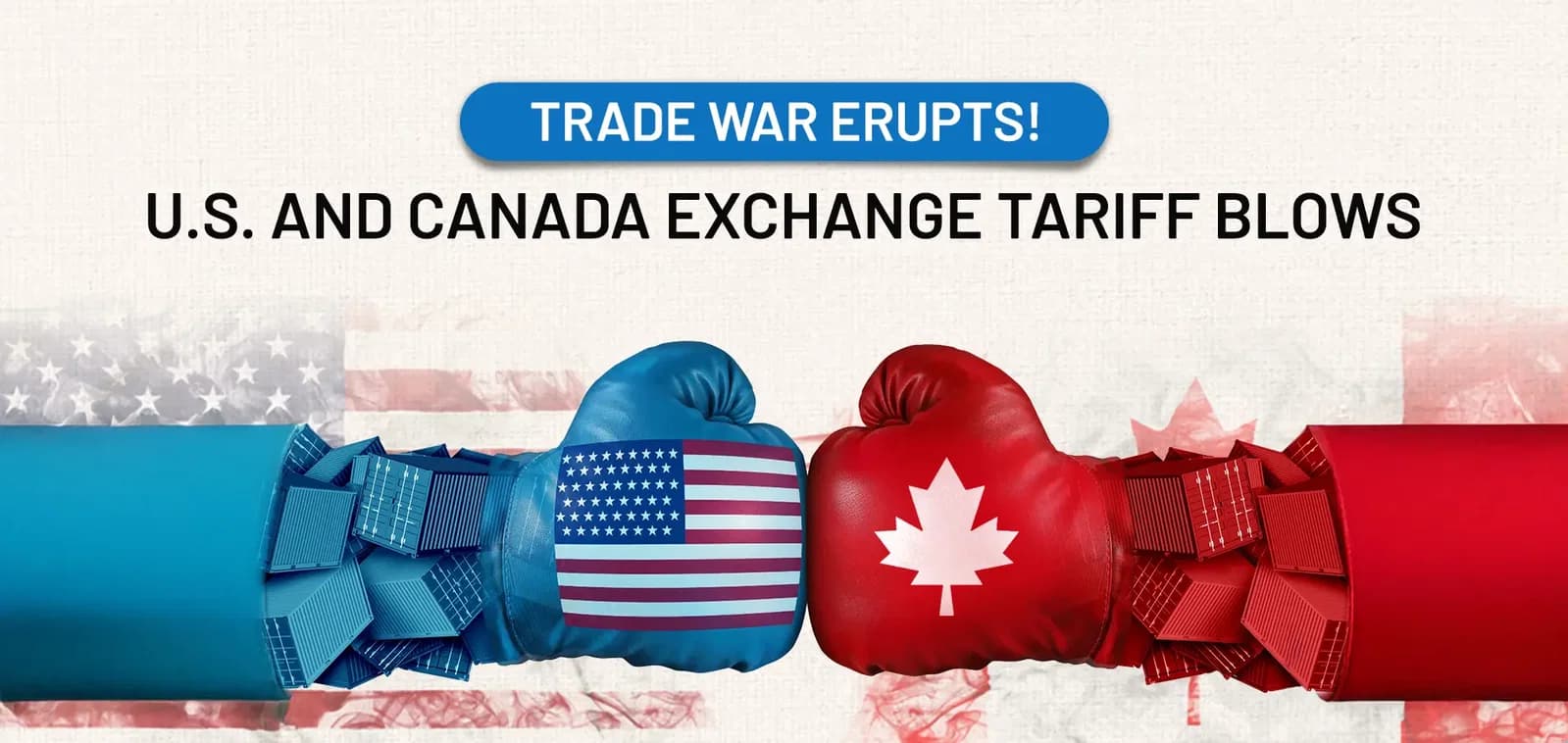
Trade War Erupts! U.S. and Canada Exchange Tariff Blows
"A total collapse of the Canadian economy because that will make it easier to annex us. That is never going to happen. We will never be the 51st state. This is a time to hit back hard and to demonstrate that a fight with Canada will have no winners."
These were Justin Trudeau’s words to BBC reporters in a recent press conference, responding to Trump’s 25% tariff imposition on Canada. In retaliation, Canada, Mexico, and China have imposed their own tariffs on the U.S. and formally launched a lawsuit against the decision with the World Trade Organization.
Basically, the worst-case scenario is now a reality. The trade wars have begun. At this point, the question isn’t how to stop the trade war—because clearly, that’s not on the table—but rather how bad the collateral damage will be. So, brace yourself because that’s what we’re talking about today.
But first, why did Trump impose the Tariffs?
A 25% tariff—10% in China’s case—on goods exported from Canada, Mexico, and China simply means that U.S. citizens will have to pay that much more for those products. But why would Trump intentionally make things more expensive for his own people?
The reasoning is twofold. First, at least in theory, this pressure could push companies to open branches on U.S. soil to avoid the tax, creating more jobs. At the same time, it could encourage American consumers to buy more domestically made products. Whether that actually happens remains to be seen.
The second reason is leverage—using tariffs as a bargaining tool to get these countries to comply with their demands. Publicly, Trump has linked the tariffs to renegotiating trade deals, stopping illegal immigration, and curbing the flow of fentanyl. But none of that was ever likely to happen, leading to the current wave of counter-tariffs from Canada.
Yet Trump shows no signs of backing down—and the reason is simple. In 2023, Canada exported about 76% of its goods to the U.S., accounting for 19% of its GDP. Mexico sent 78% of its exports to the U.S., making up roughly 37% of its GDP. Meanwhile, U.S. exports to both countries combined accounted for only 2.7% of its GDP.
In short, this trade war hurts Canada and Mexico far more than the U.S.—and Trump knows it.
Immediate Impact and Inflationary Fears
The tariffs directly threaten key sectors of the Canadian economy, putting jobs and investment at risk. The steel industry faces higher production costs and reduced competitiveness in the U.S. market, with the Canadian Steel Producers Association warning of potential job losses in the thousands. The energy sector could see dampened exports and reduced investment due to rising costs, while manufacturing and resource extraction—both heavily reliant on steel and energy—may be forced to cut production, leading to further job losses. As these industries struggle, the ripple effects could spread across the broader economy, adding to uncertainty in an already tense trade environment.

The tariffs are expected to drive inflation higher in both Canada and the U.S., directly impacting consumers. Food prices could rise as the cost of imported goods increases, making everyday essentials more expensive. The energy sector may also see higher prices for gasoline and other fuel products, adding to the financial strain on households and businesses alike. Additionally, manufactured goods that rely on steel and aluminium—such as cars, appliances, and construction materials—are likely to become more costly. As these price hikes ripple through the economy, they could erode purchasing power and slow economic growth, deepening the trade war’s financial toll.
Impact on the Housing Market
The trade war could damper Canada’s housing market, adding yet another layer of economic strain. Rising steel and aluminium costs will likely make construction materials more expensive, driving up the price of new homes and renovations. This could further squeeze affordability in an already challenging housing market. Additionally, if the trade war leads to an economic slowdown, consumer confidence may take a hit, discouraging people from making major purchases like homes. This dip in demand could, in turn, put downward pressure on housing prices. Uncertainty surrounding the ongoing dispute also plays a role—potential buyers and sellers may hesitate, leading to fewer transactions and a sluggish market.
The economic fallout from the trade war is already unfolding, with key industries, consumer prices, and even the housing market feeling the strain. While politicians remain locked in their standoff, businesses and consumers are left to navigate the rising costs and growing uncertainty. Whether this dispute escalates further or not, one thing is clear—Canada’s economy is facing an uncertain road ahead.


Blog Search
Popular Blogs
Popular Blogs
The trademarks MLS®, Multiple Listing Service® and the associated logos identify professional services rendered by REALTOR® members of CREA to effect the purchase, sale and lease of real estate as part of a cooperative selling system.