Blog Search
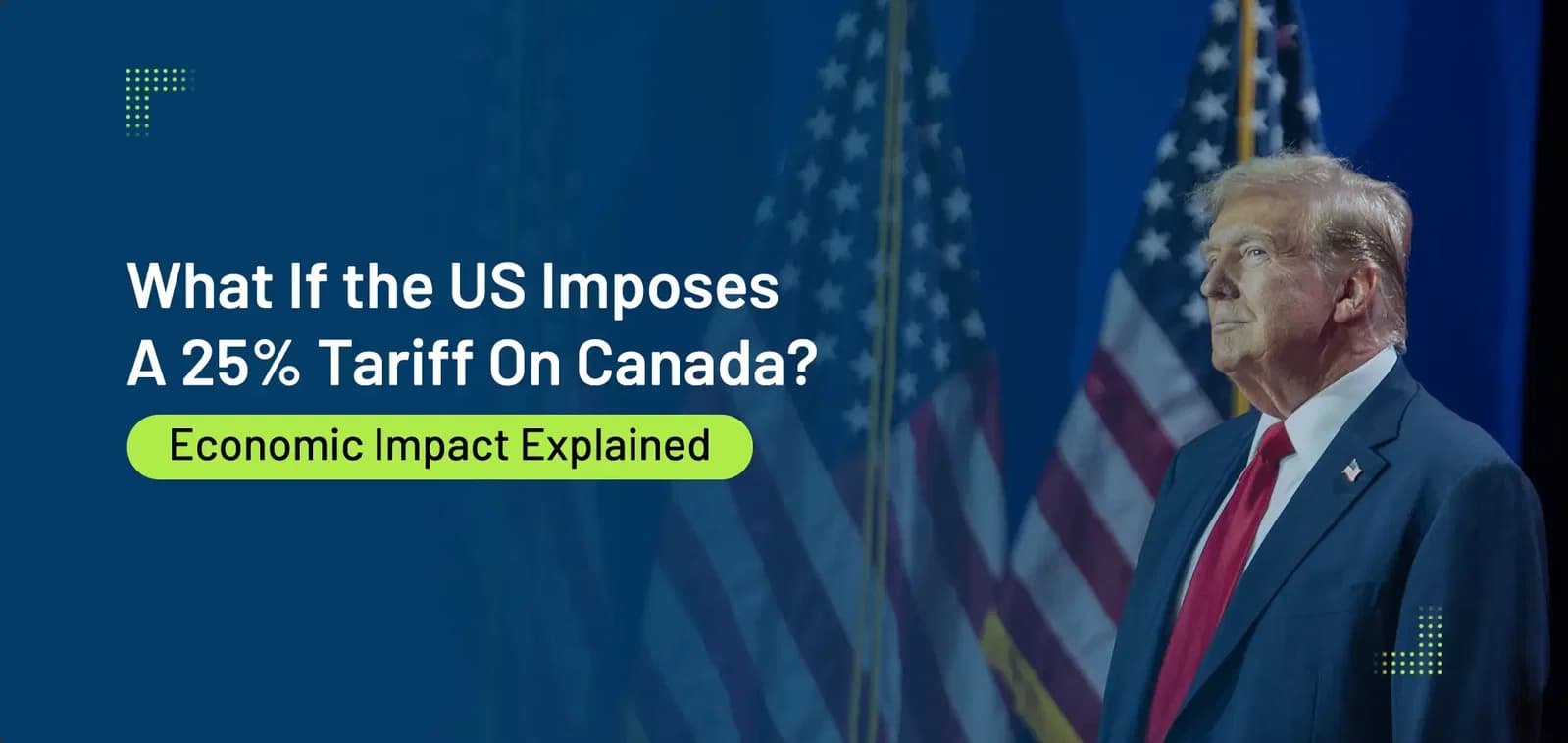
What If the US Imposes a 25% Tariff on Canada? Economic Impact Explained
"The imposition of tariffs on Canada would not only strain our trade relations but also directly impact hardworking families and businesses. Both nations must prioritise collaboration over conflict to ensure mutual prosperity." –
Robin Cherian, CEO of The Canadian Home Realty.
As discussions around trade policies heat up, Canada finds itself at a crucial crossroads. President Trump has signalled his intention to introduce sweeping tariff measures in his potential second term, which will have significant implications for global trade. Among these proposals are a 25% tariff on Canadian and Mexican imports and a 10% tariff on Chinese goods, potentially taking effect as early as February 1, 2025.
These tariffs could have widespread consequences, from reduced economic output to increased tax burdens. They are reminiscent of the previous administration’s trade policies, which imposed nearly $80 billion in new taxes on American consumers. As history has shown, such measures can reshape industries, disrupt supply chains, and impact businesses and consumers alike.
Today, we will explore what these proposed tariffs could mean for Canada’s industries and economy.
Key Areas of Impact
If Donald Trump imposes tariffs on Canada, the areas with the maximum impact are likely to include:
01Trade and Export-Driven Industries
Sectors like automotive, lumber, and agriculture will face significant challenges as these industries heavily rely on exports to the U.S. Increased tariffs will raise costs, reduce competitiveness, and disrupt supply chains.
02Cross-Border Manufacturing
Industries dependent on integrated supply chains like automotive manufacturing could experience delays and increased costs. Canadian factories that rely on U.S. components—or supply them—will bear the brunt.
03Economic Growth
Tariffs can hurt Canada’s overall GDP growth, as the U.S. is its largest trading partner. Disruptions in trade flows will negatively impact small businesses and regional economies, particularly those near the border.
04Employment
Job losses could occur in affected industries like manufacturing, forestry, and agriculture, as reduced U.S. demand impacts operations.
05Immigration and Border Relations
If the tariffs are directly tied to migration concerns, this could strain Canada-U.S. relations and lead to stricter immigration policies or heightened border tensions.
These tariffs would target major trade-dependent sectors and deeply affect Canada's economy, creating ripple effects across industries and regions.
Canada’s response

Although we dont have any official statements as of now apart from that of liberal leadership candidate Chrystia Freeland who proposes retaliatory tariffs as a strategy to counter U.S. President Trump’s 25% tariff threat on Canadian goods.
However, last time, in response to U.S. tariff threats, such as the 2018 steel and aluminium tariffs (25% and 10%) imposed under former President Donald Trump, Canada adopted a multifaceted approach. It strongly rejected the tariffs as “unacceptable” and “punitive,” emphasising the interconnected U.S.-Canada economy and security partnership. Diplomatic efforts by Prime Minister Justin Trudeau and officials sought dialogue, while Canada retaliated with $16.6 billion in tariffs targeting U.S. goods like steel, whiskey, and agricultural products. Concurrently, Canada leveraged multilateral platforms like the WTO and collaborated with allies to advocate for fair trade rules. During USMCA negotiations, it addressed broader trade tensions, though steel and aluminium tariffs persisted temporarily.
Looking ahead, Canada would likely mirror this strategy if faced with renewed tariff threats: blending diplomacy, measured retaliation, and multilateral engagement to safeguard its interests while avoiding escalation.
Conservative Party Stance
Conservative Party leader Pierre Poilievre, in a recent interview with the New York Post, addressed President Donald Trump’s threat of 25% tariffs, framing the U.S. leader as a “deal-maker” who “wants to win” but warning that both nations would “lose as Americans and Canadians if we get into a trade war.” While signalling openness to negotiation, Poilievre made clear that a Conservative government would retaliate decisively if tariffs were imposed on February 1, 2024. He outlined a targeted strategy to minimise harm to Canada, focusing on levying tariffs on non-essential U.S. goods—products Canada “doesn’t need, can make ourselves, or source elsewhere.” Examples might include luxury items, certain agricultural goods, or manufactured products with viable alternatives, aiming to maximise economic pressure on U.S. industries while shielding Canadian consumers and businesses from collateral damage.
The Bottom Line
The spectre of a 25% U.S. tariff on Canadian goods is more than a policy threat—it’s a litmus test for Canada’s economic resilience and diplomatic agility. As history has shown, tariffs are a blunt instrument: while they may score political points, their ripple effects—higher costs, job losses, and supply chain chaos—harm workers, businesses, and consumers on both sides of the border. For Canada, whose economy is deeply interwoven with the U.S., the stakes are existential.
Ultimately, the path forward hinges on balancing toughness with pragmatism. Tariffs may force short-term adjustments, but Canada’s long-term security lies in diversifying trade, bolstering domestic industries, and fostering innovation. As Robin Cherian rightly notes, collaboration, not conflict, is the key to mutual prosperity. Whether through Liberal multilateralism or Conservative deal-making, Canada’s response must signal to resolve without recklessness—a reminder that while trade wars have no winners, preparedness and smart policy can still tilt the scales in favour of stability and growth.


Blog Search
Popular Blogs
Popular Blogs
The trademarks MLS®, Multiple Listing Service® and the associated logos identify professional services rendered by REALTOR® members of CREA to effect the purchase, sale and lease of real estate as part of a cooperative selling system.