Blog Search
Bank of Canada’s Rate Announcement on Sept 4th: What to Expect

As the Bank of Canada gears up for its interest rate announcement on September 4th, all eyes are on the central bank's next move amidst a rapidly changing economic landscape. We say this because the past few months have seen significant developments in both inflation and unemployment rates, which as always are going play a major role in BoC’s decision. General consensus points towards another rate cut so join us as we explore the likelihood of that being the case.
INFLATION AND RECENT INTEREST RATE CUTS

The Bank of Canada has already made two notable interest rate cuts in recent months—first on June 5th, followed by another on July 24th. These cuts were implemented in response to various economic pressures, including a decline in inflation. According to Statistics Canada, the inflation rate in July 2024 was recorded at 2.5%, marking the lowest level since March 2021. This was a decrease from 2.7% in June 2024, signalling a significant cooling in the inflationary pressures that had previously gripped the Canadian economy.
With inflation at a 40-month low, the central bank may see little harm in continuing to lower interest rates. The aim of such reductions would be to stimulate the economy by making borrowing cheaper, thereby encouraging consumer spending and investment. Lower interest rates often lead to increased economic activity, which can help counterbalance the negative effects of low inflation.
RISING UNEMPLOYMENT: A CAUSE FOR CONCERN
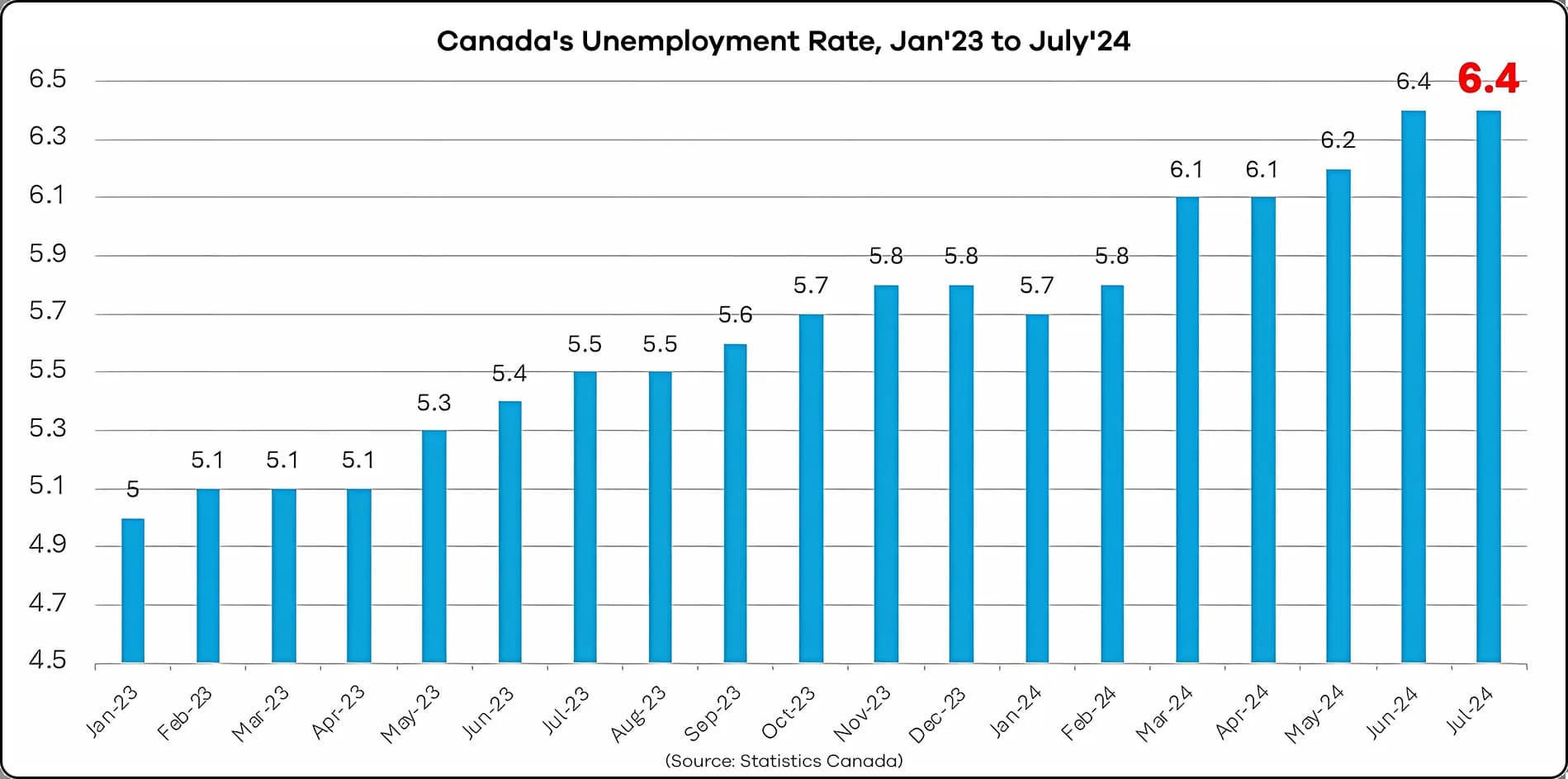
While the inflation picture might suggest a more relaxed approach to monetary policy, the unemployment rate presents a more concerning scenario. As of July 2024, Canada’s unemployment rate stood at 6.4%, a worrying increase from 5% in January 2023. This 1.4% rise, including a 0.7% increase within 2024 alone, indicates that the labour market is under significant stress.
Job losses have been particularly pronounced in transportation, housing, and public administration. In contrast, gains have been seen in the food services, accommodation, and agriculture sectors. However, these gains haven't been enough to offset the overall softening of the job market, raising concerns about the potential for a Bank of Canada rate cut. Complicating this scenario is the ongoing wage growth, which could make it more challenging for the Bank to pivot towards easing monetary policy while keeping inflationary pressures in check. The Bank of Canada, therefore, faces the delicate task of balancing the need to support employment while also managing inflationary expectations.
INTEREST RATES AND ECONOMIC GROWTH
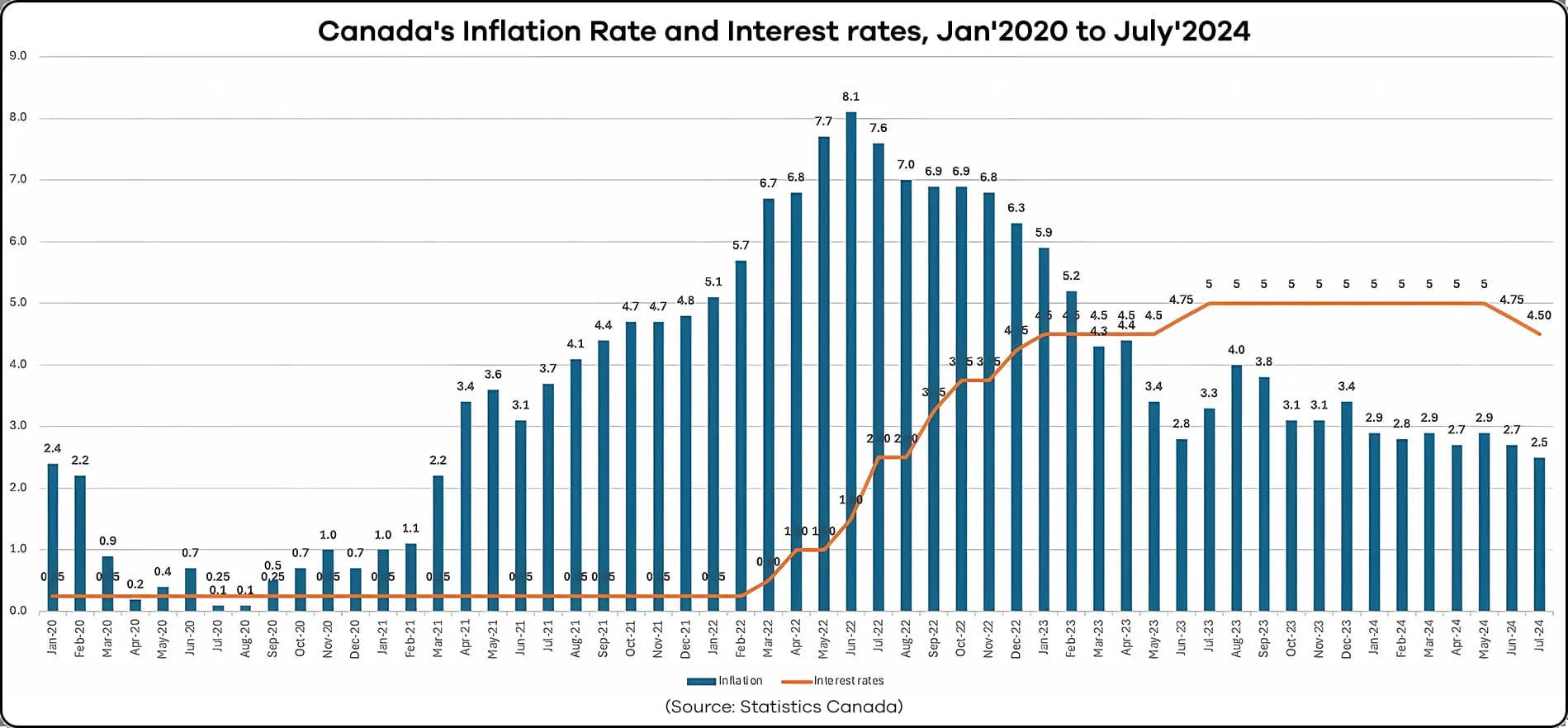
Since July 2023, the Bank of Canada had kept interest rates steady at 5% until the cuts in June and July 2024. This period of stability helped reduce inflation, but it also had the effect of dampening consumer consumption. Now, even though GDP growth has been observed, the lower levels of inflation suggest that there may be room for further interest rate cuts to maintain economic momentum.
Given the current economic indicators, there are strong reasons to believe that the Bank of Canada will announce additional rate cuts not just in September, but possibly in the subsequent announcements scheduled for October and December. Although the central bank's decisions during these months will likely be influenced by ongoing assessments of both inflation and unemployment trends but as things stand now a cut is the most likely scenario.
IMPACT ON THE HOUSING MARKET
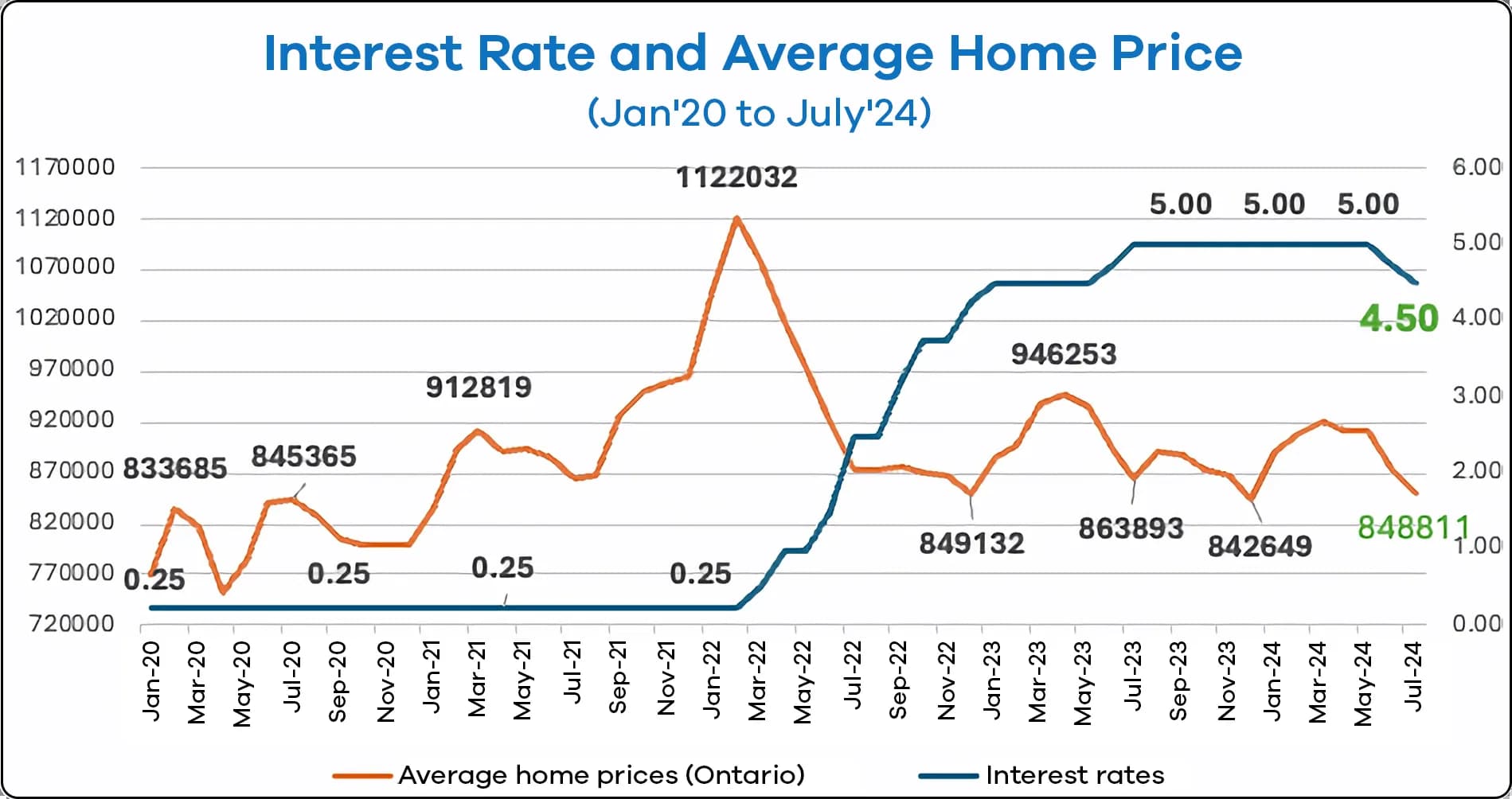
One of the sectors that could benefit significantly from further interest rate reductions is the housing market. With interest rates potentially set to fall further, borrowing costs for homebuyers would decrease, making mortgages more affordable. This could lead to a rebound in the housing market, which has seen a slowdown due to previous high interest rates.
For prospective buyers, the current environment presents an opportunity. Property prices are still relatively low, and with the possibility of rate cuts on the horizon, the housing market could soon see increased activity and price growth. Buyers who act quickly could secure favorable deals before prices begin to climb again.
A RATE CUT OF 25 BASIS POINTS MOST LIKELY
While the Bank of Canada has implemented measures to curb inflation, the rate remains persistently above its target of 2%. This indicates a need for continued rate adjustments to effectively manage inflationary pressures. Given the anticipated moderate expansion of both the global and Canadian economies, the Bank is likely to adopt a cautious approach.
Several leading economists, including Douglas Porter from BMO and Derek Holt from Scotiabank, have predicted additional rate cuts in 2024. Porter specifically anticipates two more cuts, with the next potentially occurring in September if core CPI remains low. Based on these forecasts and current economic indicators, a further rate cut of 25 basis points seems to be the most probable scenario. This aligns with the Bank's ongoing strategy of supporting the economy while maintaining inflation within a target range.


Blog Search
Popular Blogs
Popular Blogs
The trademarks MLS®, Multiple Listing Service® and the associated logos identify professional services rendered by REALTOR® members of CREA to effect the purchase, sale and lease of real estate as part of a cooperative selling system.