Blog Search
Which Direction Should Your House Face? A Complete Guide for Homebuyers

If you’re shopping for a home, you’ve probably come across listings that highlight whether a property is north-facing, south-facing, east-facing, or west-facing. But which direction is the best? Does it really make a difference?
The short answer is yes, but not in the way most people think.
The direction your home faces can affect natural light, indoor temperatures, energy costs, and even how much you enjoy your backyard. However, there’s no universally “best” direction. The right choice depends on your lifestyle, climate, and personal preferences.
Let’s take a closer look.
Why Does a Home’s Direction Matter?
The direction your home faces determines how sunlight moves through the property during the day. This influences several aspects of daily living, including:
- The amount of natural light your home receives
- Indoor temperatures throughout the year
- Heating and cooling costs
- Outdoor living comfort
- Solar panel efficiency
For example, homeowners in colder climates often appreciate extra sunlight during winter, while those in warmer areas may prefer a home that stays cooler during the hottest part of the day.
South-Facing Homes
South-facing homes are often considered the most desirable because they receive the most sunlight throughout the day.
The abundance of natural light makes rooms feel brighter and more inviting. During colder months, the extra sunshine can also help warm your home naturally, which may reduce heating costs. If you’re considering installing solar panels in the future, this orientation is usually the most efficient.
The downside is that the same sunlight can make the home warmer during summer. Without proper shading or cooling, rooms may become uncomfortable during the hottest part of the day.
Best for: Buyers who love bright interiors and want to maximize natural light.
East-Facing Homes
East-facing homes welcome the morning sun while remaining cooler later in the day.
If you enjoy waking up to natural light or spending mornings on the patio with a cup of coffee, this orientation is a great fit. Since the strongest afternoon sun falls on the opposite side of the house, east-facing homes often stay more comfortable during summer afternoons.
The only drawback is that rooms may receive less natural light in the evening.
Best for: Early risers and homeowners who prefer cooler afternoons.
West-Facing Homes
West-facing homes receive the most sunlight during the afternoon and evening.
This makes them ideal for anyone who enjoys relaxing outdoors after work or watching the sunset from the backyard. Evening gatherings, barbecues, and outdoor entertaining often benefit from this orientation.
However, afternoon sunlight can significantly increase indoor temperatures during summer, which may lead to higher air conditioning costs if the home isn’t well insulated.
Best for: Buyers who love evening sunshine and outdoor entertaining.
North-Facing Homes
North-facing homes are often overlooked, but they have their own advantages.
They receive softer, more consistent natural light throughout the day, reducing glare and creating a comfortable indoor environment. These homes also tend to stay cooler during summer, which many homeowners appreciate.
The trade-off is that they receive less direct sunlight during winter, so heating costs may be slightly higher. In colder regions, shaded driveways and walkways may also hold onto snow and ice longer.
Best for: Buyers who prefer cooler homes and even natural lighting.
Don’t Forget About the Backyard
When deciding which direction facing house is good, it’s worth thinking beyond the front door.
The direction your backyard faces often has a bigger impact on how you’ll use your outdoor space.
- A south-facing backyard gets sunlight for most of the day, making it ideal for gardening and sunbathing.
- A west-facing backyard offers warm evenings and beautiful sunsets, making it perfect for entertaining guests.
- An east-facing backyard enjoys pleasant morning sunshine while staying cooler later in the day.
- A north-facing backyard provides more shade, making it a comfortable space for children, pets, or anyone who prefers cooler outdoor areas.
If you spend a lot of time outside, backyard orientation can be just as important as the direction the house faces.
Quick Comparison Chart
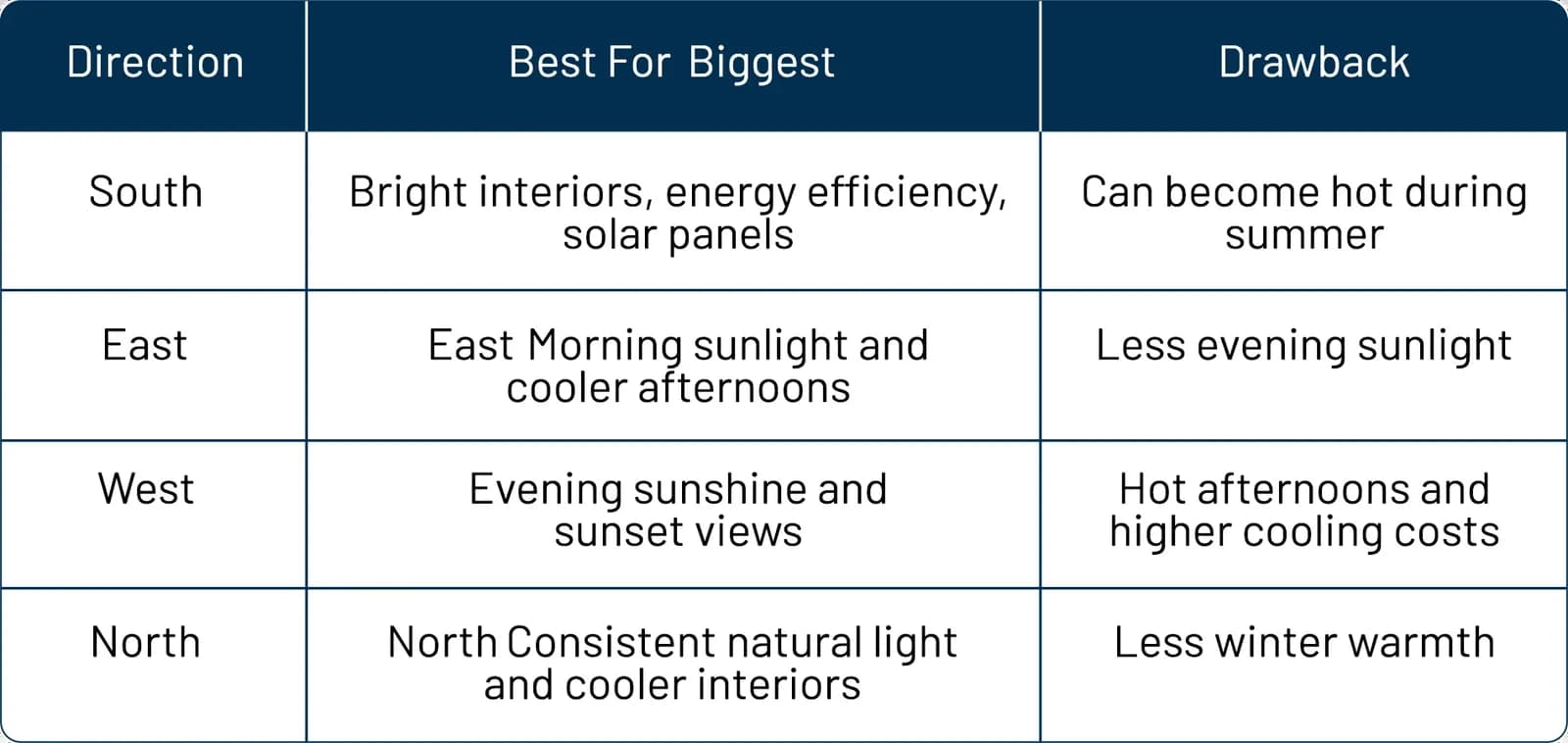
So, Which Direction Facing House Is Good?
The answer comes down to how you live.
If you want plenty of sunlight throughout the day and lower winter heating costs, a south-facing home is a great option.
If you enjoy peaceful mornings and cooler afternoons, an east-facing home may suit you better.
If evening relaxation and sunset views are your priority, you’ll likely appreciate a west-facing home.
And if you prefer a cooler indoor environment with soft, even lighting, a north-facing home could be the right choice.
At the end of the day, home orientation is just one factor to consider when buying a property. Window placement, insulation, surrounding trees, and the home’s layout often have just as much impact on comfort and energy efficiency.
Rather than searching for the one “perfect” direction, focus on finding the orientation that best matches your lifestyle. That’s the key to choosing a home you’ll enjoy for years to come.


Blog Search
Popular Blogs
Popular Blogs
The trademarks MLS®, Multiple Listing Service® and the associated logos identify professional services rendered by REALTOR® members of CREA to effect the purchase, sale and lease of real estate as part of a cooperative selling system.