Blog Search
Top 5 Real Estate Questions Everyone’s Googling Right Now

On September 4, 1998, Google was officially launched, and since then, it has become the go-to destination for anyone seeking answers. In fact, the name itself has transformed from a noun into a verb—“Google it”—a testament to the profound impact this search engine has had on our daily lives.
Even with the rapid rise of AI, Google continues to stand strong as our primary hub for information. That said, it’s important to remember that not everything on Google is gospel. Just because something appears in search results doesn’t make it true. At some point, most of us have probably Googled a simple cold only to be convinced we have something far more serious, like cancer. That’s why it’s wise to take everything you read on Google with a grain of salt, especially when it comes to real estate. Buying a home is a high-stakes investment, and even a small mistake can lead to big losses. So today, we’re tackling the five most Googled real estate questions—answered by the seasoned professionals at The Canadian Home.
01Is Now A Good Time To Buy A Home?
Here’s something no search engine will ever say directly: there’s no universally “good” or “bad” time to buy a home. It all depends on what you’re looking for, where you want to buy, and what your budget allows.
That said, current conditions are tipping in favour of buyers. With interest rates at 2.75%—the lowest they've been in quite some time—this could be an ideal opportunity to make your move. As of April 2024, the average selling price of a home in Ontario stands at $870K, which is 5.68% lower compared to last year. That’s a significant window of opportunity for buyers.
To get a clearer picture of when, where, and how to buy, we recommend checking out our April Market Report, part of our monthly series offering expert insights into the housing market.
02How Can I Increase the Value of My Property?
This is one of the most common questions asked by homeowners looking to get the best return when selling—and honestly, it's the right question to be asking.
According to our realtors, the best way to boost your property’s value is to invest in smart, targeted renovations. Simple upgrades like modernising your kitchen, updating bathroom fixtures, applying a fresh coat of paint, or enhancing curb appeal can significantly improve the overall look and feel of your home.
The key is to focus on what’s trending right now. Today’s buyers are often drawn to features like open-concept layouts, energy-efficient appliances, and functional outdoor spaces. If your home is missing these, small changes can make a big impact.
And if budget is a concern, don’t worry—The Canadian Home offers up to $25,000 in interest-free renovation loans to help you get your property market-ready without the financial strain.
03What Are the Steps Involved in Buying a House?
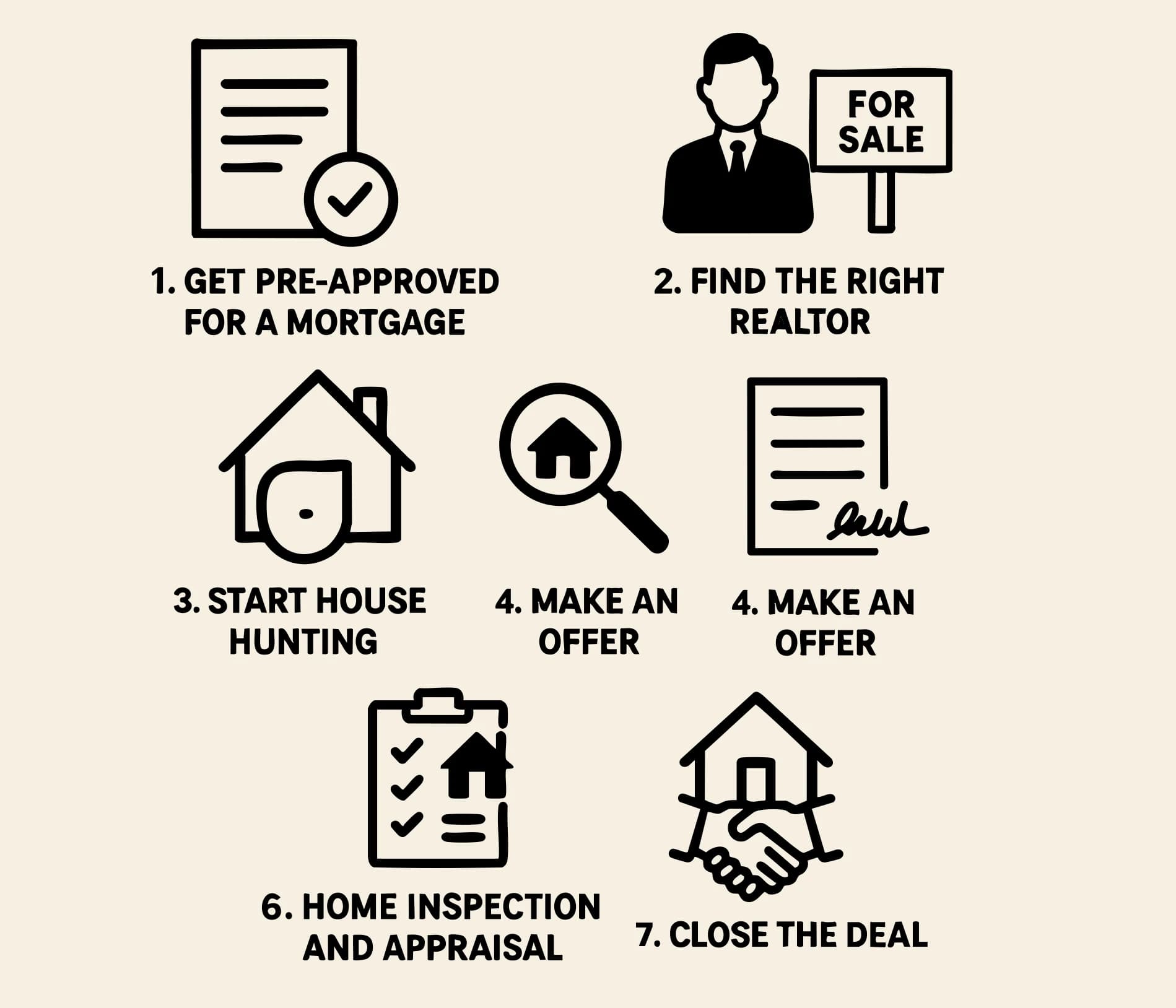
The first step is getting pre-approved for a mortgage. This helps you understand your budget and shows sellers you’re serious. Next, find a reliable realtor who knows the local market and can guide you through the process. With their help, start house hunting and narrow down your options based on your needs and goals.
Once you’ve found the right home, your agent will help you make an offer. If it’s accepted, you’ll move on to the home inspection and appraisal to ensure everything checks out. Then, you’ll finalize your mortgage, complete the paperwork, and prepare for closing day. Once the deal is closed—you’re officially a homeowner!
04What Credit Score Is Needed to Buy a House in Canada?
In Canada, the minimum credit score required to buy a home depends on the type of lender. For traditional mortgages through major banks (known as prime lenders), you'll typically need a score between 650 and 680. That said, alternative lenders—such as credit unions or trust companies—may offer mortgage options to buyers with lower credit scores, especially if you can provide a larger down payment or add a co-signer.
Your credit score directly impacts your mortgage terms. A higher score can qualify you for better interest rates, lower monthly payments, and thousands in long-term savings. Scores are based on payment history, credit utilization, credit history length, credit mix, and recent credit activity. If your score needs improvement, taking some time to build it up before applying could put you in a stronger financial position.
05What Are the Closing Costs When Buying a Home?
So, you’ve found your dream home, sealed the deal, and just when you think it’s all done, here come the closing costs. These are the final expenses you’ll need to cover before getting the keys, and they can add up quickly if you're not prepared.
In Canada, closing costs typically range from 1.5% to 4% of the purchase price. This includes things like land transfer tax, legal fees, title insurance, and home inspection fees. You might also see adjustments for property taxes or utility bills. The bottom line is to budget for them early so they don’t catch you off guard on closing day.
Final Thoughts
While Google is a great place to start your real estate journey, it’s no substitute for expert advice—especially when it comes to one of the biggest financial decisions of your life. The five questions we’ve covered are just the tip of the iceberg, and every buyer or seller’s situation is unique.
At The Canadian Home, we go beyond search results to give you real, personalised guidance rooted in experience and local market knowledge. So the next time you’re tempted to “Google it,” know that we’re just a call—or click—away with answers that truly move you forward.

Blog Search
Popular Blogs
Popular Blogs
The trademarks MLS®, Multiple Listing Service® and the associated logos identify professional services rendered by REALTOR® members of CREA to effect the purchase, sale and lease of real estate as part of a cooperative selling system.