Blog Search
Ontario Housing Market Update: May 2024

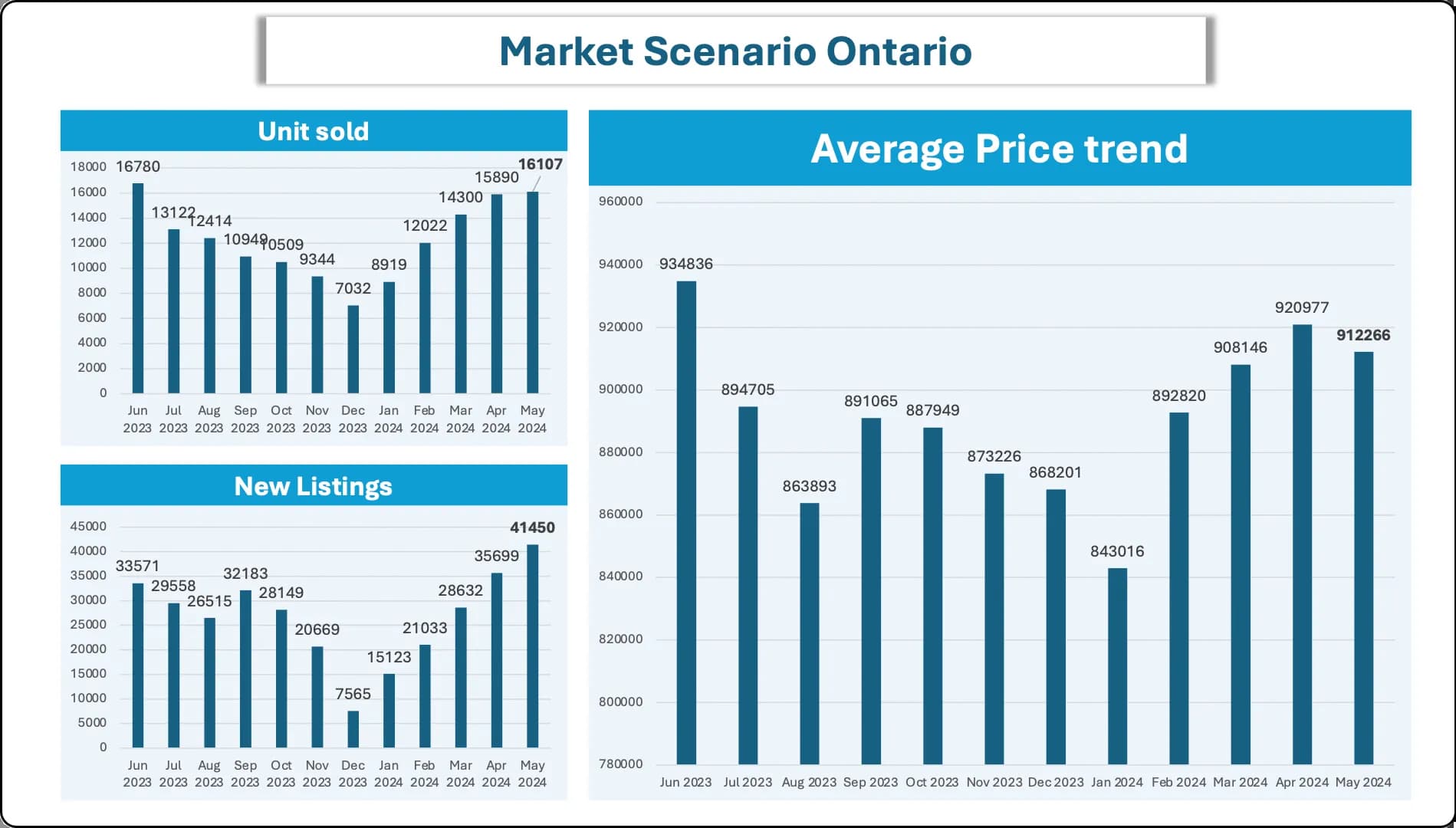
As the Ontario housing market navigates through the first half of 2024, May presents an intriguing shift in trends. After a steady growth trajectory from January to April, the market experienced its first dip in average prices for the year, with a modest 1% decrease. Despite this, the sector shows signs of resilience with a 1.5% increase in unit sales and a significant 14.4% rise in listings. Notably, half of the top 30 cities in Ontario reported a decrease in average prices, signaling a potential recalibration in the market dynamics.
Analyzing the Impact of Interest Rate Cuts
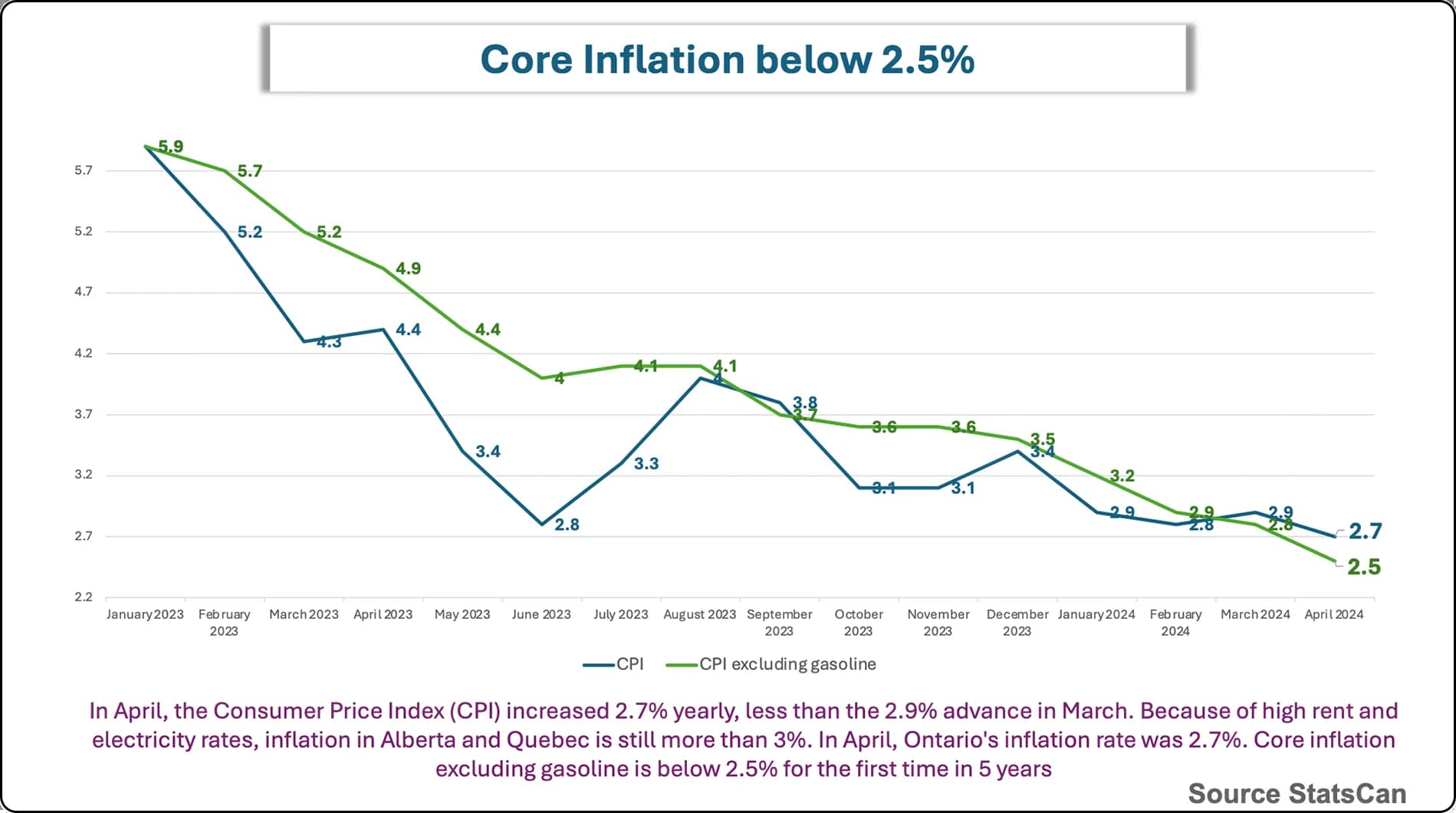
In a significant move, the Bank of Canada (BoC) reduced interest rates by 25 basis points, marking the first such reduction in four years and a pioneering move among G7 nations. This decision comes on the back of robust economic growth, with the GDP expanding by 0.8% in the first quarter of 2024 and core inflation remaining below 2.8 for three consecutive months. The rate cut aims to sustain this growth momentum. However, there is a caveat: if inflation creeps above 3.3% in the near term, the BoC might be compelled to raise rates again, potentially cooling down the market's current pace.
Market Projections for Ontario
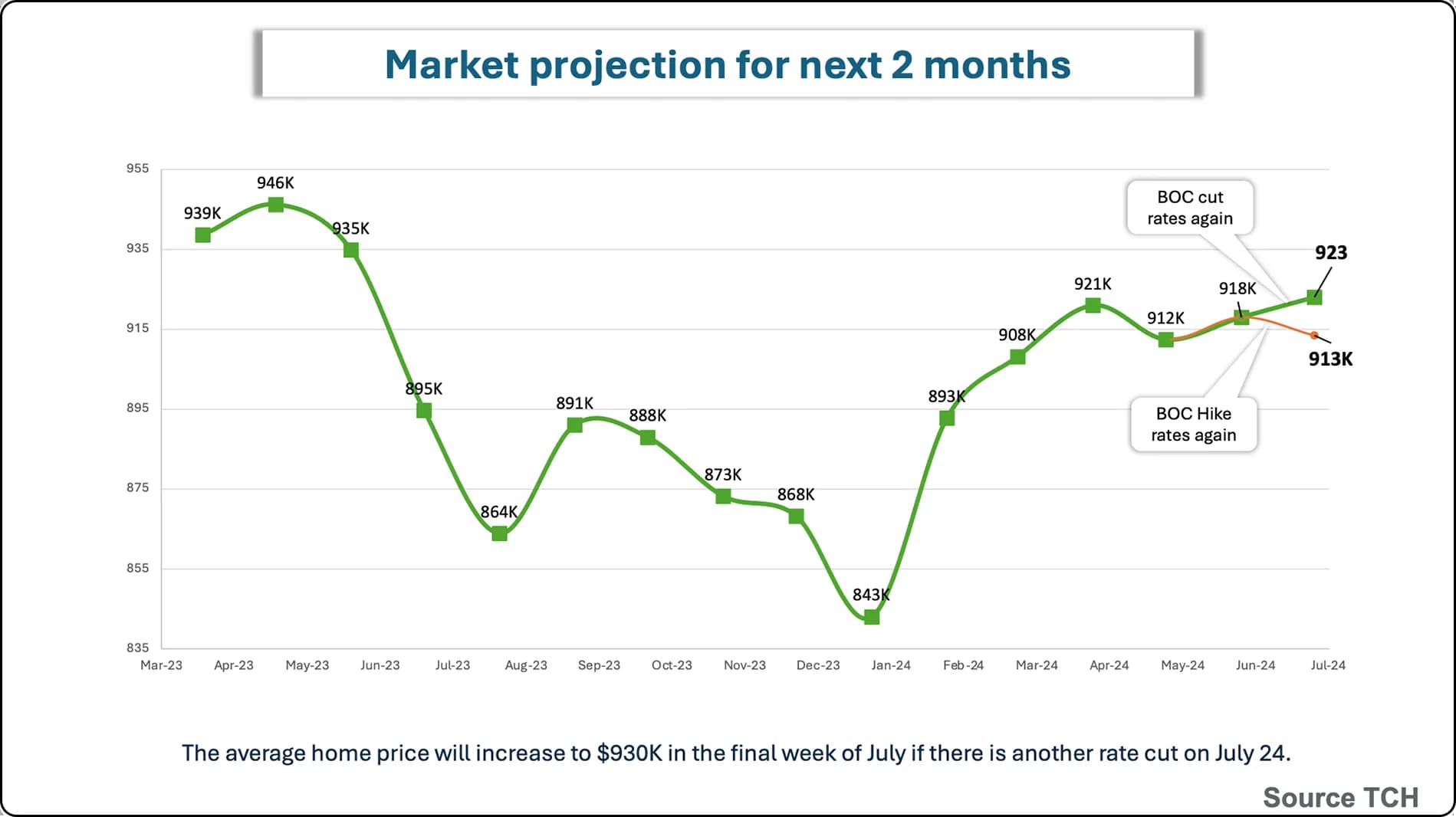
Looking ahead, the Ontario housing market faces three potential scenarios based on future monetary policy decisions:
Stagnation in Rates: If the Bank of Canada (BoC) decides to maintain the current interest rates, the housing market is projected to follow a steady trajectory, potentially reaching an average home price of around 918K by June 2024.
Further Rate Cuts: Another reduction in interest rates could stimulate the market further, pushing average home prices up to approximately 923K by July 2024, reflecting a positive growth trend.
Rate Hikes: Conversely, if the BoC opts to increase rates, the market might see a decline in average prices, falling to the range of 913K, indicating a slight dip but still maintaining relatively high price levels.
The Persistent Challenge of Inflation
The recent interest rate cut by the BoC brings forth a critical question: can this trend of rate reduction be sustained? If the BoC continues to slash rates, there is a possibility of increased consumer expenditure and purchasing power, which could drive inflation back to the 3% threshold. Such a scenario would render the current lower interest rates unsustainable, likely prompting the BoC to consider rate hikes again. This cyclical challenge underscores the delicate balance the central bank must maintain to foster economic growth while keeping inflation in check.
The Bottom Line
The Ontario housing market is at a crossroads, with recent trends reflecting a complex interplay of factors. The slight dip in average prices juxtaposed with rising sales and listings indicates a market in flux. The BoC's recent rate cut introduces both opportunities and risks, highlighting the importance of closely monitoring inflation trends and economic indicators. Whether the market will stabilize, soar, or face further corrections will largely depend on the BoC's future monetary policy decisions and their impact on inflation and consumer behavior.
As we move forward, stakeholders in the Ontario housing market should brace for potential fluctuations and stay informed about economic policies and market conditions. By understanding these dynamics, buyers, sellers, and investors can make more strategic decisions in this evolving landscape.


Blog Search
Popular Blogs
Popular Blogs
The trademarks MLS®, Multiple Listing Service® and the associated logos identify professional services rendered by REALTOR® members of CREA to effect the purchase, sale and lease of real estate as part of a cooperative selling system.