Blog Search
Ontario Housing Market in 2024: Boom or Bust? A Deep Dive and Predictions

It's May 2024, and the Ontario housing market is a different beast than it was in January. Interest rates have held for months, inflation is showing signs of cooling, and the government is taking action. Remember the first-time buyer incentive? Gone. But there are amendments in the Home Buyers Plan. Buckle up as The Canadian Home dives into the first quarter's twists and turns, analyses the data, and predicts what's next for Ontario's ever-evolving housing market. After all, knowledge of the past empowers us for the future.
The numbers so far
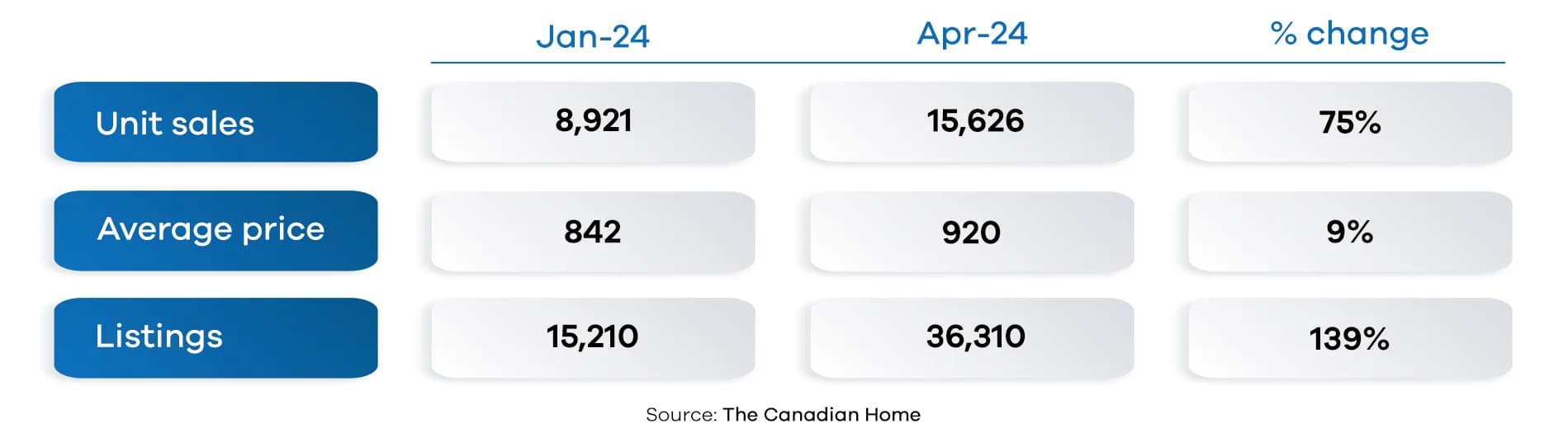
The Ontario housing market has been on an upward trajectory in the last four months, with the average home price surging by 9%, marking an approximate monthly increase of 2.3% since January. Accompanying this surge is a notable 139% increase in listings and a significant 75% uptick in unit sales. Despite these fluctuations, the market maintains stability as interest rates remain unchanged, signalling a status quo until any shifts occur in interest rate policies. Presently, Ontario's housing scene mirrors its typical spring season state, characterised by a flurry of activity.
With an influx of buyers encountering a plethora of options daily, the market dynamic is intense, propelling home prices upwards across all property types and most regions of Ontario. This surge in activity makes the current season one of the most competitive in the real estate calendar, underscoring the challenges and opportunities present for both buyers and sellers alike.
The Takeaway
The market is surging faster than anyone predicted, with rapid growth highly likely in the coming months. According to Manoj Karatha, Broker of Record for The Canadian Home, the upcoming inflation report on May 20th holds the key. If inflation dips below 2%, the market could skyrocket.

Mr. Karatha's point is undeniable - the numbers scream growth. As the chart demonstrates, prices in the top 4 cities have climbed over 20%, while unit sales in Burlington and Ottawa have exploded by more than 100%. Across the top 10 cities, unit sales have surged by over 60%, with a staggering 65% increase in the top 25. We'll be diving deeper into growth patterns in these cities, particularly Scarborough, in an upcoming blog - stay tuned!
So, who benefits most in this market? Right now, it's a delicate balance – a buyer's market teetering towards a seller's market. The good news? It's an opportune time for everyone. Prices are neither excessively high nor bottom-of-the-barrel, and a growing market presents opportunities for all. Sellers can capitalize on rising demand, buyers can potentially secure a home before prices climb further, and investors can leverage the promising growth trajectory.
The Rate Factor
Canadians shouldn't expect a significant drop in interest rates anytime soon. Inflation remains above the Bank of Canada's target, and the central bank will likely use interest rates to control inflation. Additionally, ongoing global conflicts are disrupting supply chains, which can further increase inflationary pressures. The Bank of Canada will reassess the situation in the coming months based on economic data, but even if rates stay the same or rise, it's uncertain when they'll return to lower levels given the current circumstances.
Our Forecast
The Canadian housing market is poised for a period of adjustment. While we witnessed record-breaking growth in recent months, the long-term outlook remains positive. According to Robin Cherian CEO of The Canadian Home, "Current market trends suggest strong potential for continued home price appreciation in 2024. Factors like stable interest rates and a controlled Bank of Canada (BoC) approach can further fuel this momentum."
A return to more sustainable growth is expected in 2025-2026, fueled by lower interest rates, population increases, and rising disposable incomes. While affordability concerns will persist, particularly for first-time buyers, a rebound in sales and prices is anticipated.
This will create a ripple effect in the rental market, with increased demand pushing rents higher. Purpose-built rental completions will rise, but the gap between supply and demand is unlikely to close completely, keeping rental markets competitive. Overall, Canada's housing market is adapting to a new normal, one characterized by moderate growth and a focus on affordability.
Current market trends suggest strong potential for continued home price appreciation in 2024. Factors like stable interest rates and a controlled Bank of Canada (BoC) approach can further fuel this momentum.


Blog Search
Popular Blogs
Popular Blogs
The trademarks MLS®, Multiple Listing Service® and the associated logos identify professional services rendered by REALTOR® members of CREA to effect the purchase, sale and lease of real estate as part of a cooperative selling system.