Blog Search
Inflation Falls to 1.6%: Rate Cut of 50 Basis Points Possible?
It finally happened: Canada's inflation rate has at last reached a historic low of 1.6%, marking the first time inflation has dipped to this level in 46 months. This significant development is bound to reshape the real estate market, creating opportunities for homebuyers, sellers, and investors alike. The question is, are they ready to act on it yet? Given that most cities in Ontario are still experiencing a slowdown in transactions, it’s more likely that people are waiting for further rate cuts before making a move. Unfortunately, while that may seem like the most logical approach, it might not be the wisest course of action at this point.
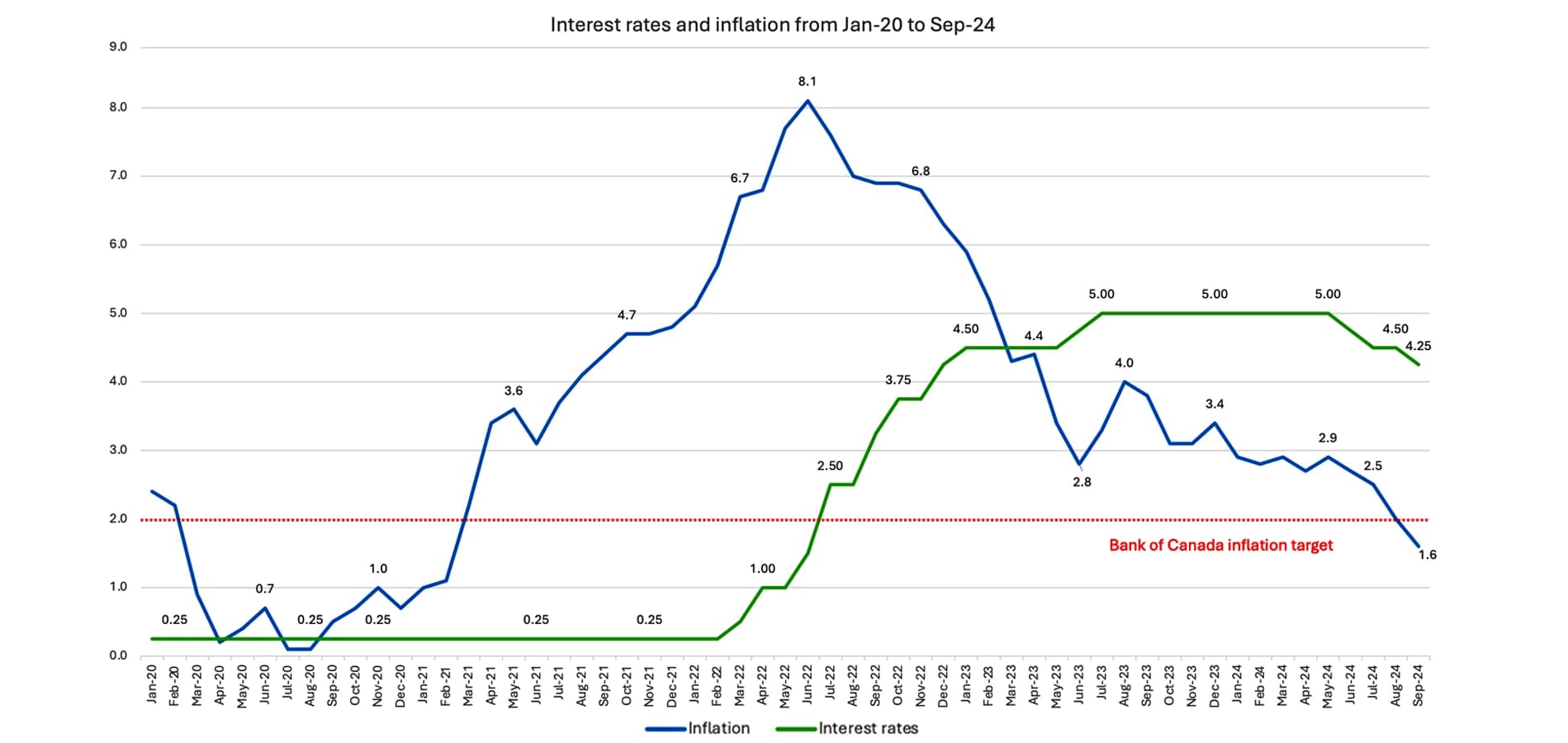
The Bank of Canada's Response to Lower Inflation
In response to the decline in inflation, Governor Tiff Macklem of the Bank of Canada has signaled potential changes in monetary policy. At the most recent Bank of Canada meeting, Macklem stated that if inflation continues to decline, the Bank might consider reducing interest rates at a faster pace. This shift could offer further relief to homebuyers, as lower interest rates would make borrowing cheaper, thus increasing affordability in the housing market.
For nearly four years, inflation has been a top concern for policymakers. Now, with inflation under control, the Bank of Canada’s focus has shifted to another pressing economic issue: unemployment. Although inflation has dropped, Canada's unemployment rate remains a challenge, hovering at 6.4%, with only a marginal reduction of 0.1% on September 24. Despite three consecutive interest rate cuts, the unemployment rate has not seen significant improvement.
Impact on Ontario's Housing Market
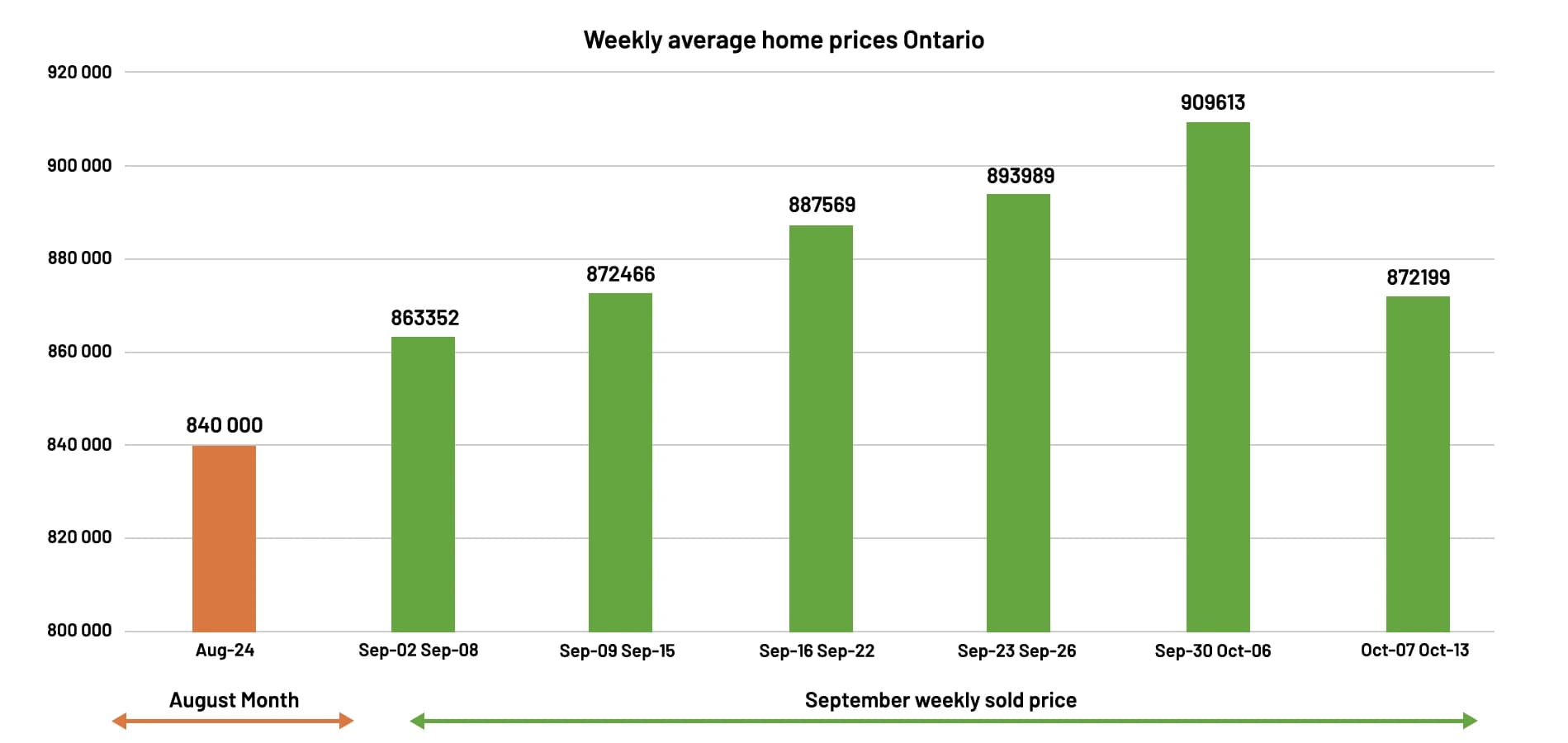
The ongoing reductions in interest rates have already had a noticeable effect on home prices, particularly in Ontario. After the third rate reduction, home prices in Ontario surged dramatically. Between September 30 and October 6, 2024, the average price of a home in the province rose by $22,000 in the first week, $10,000 in the second, and $15,000 in the third, peaking at $908,000.
This trend highlights the strong relationship between interest rate cuts and housing activity. Rate cuts make mortgages more affordable, driving demand for homes, which in turn pushes prices upward. Over the past year, Ontario has experienced an 8% increase in home prices in just 27 days, a clear indicator of the impact of the rate cuts.
What Buyers Can Expect
| City | Aug 2024 | Oct 2024 (Current) | Growth |
| Caledon | 1237133 | 1590600 | 28.6% |
| Toronto | 1032599 | 1259670 | 22.0% |
| Etobicoke | 959512 | 1126637 | 17.4% |
| Scarborough | 929465 | 1036361 | 11.5% |
| Kawartha Lakes | 684191 | 762677 | 11.5% |
| Vaughan | 1227216 | 1362340 | 11.0% |
| North York | 1350168 | 1438122 | 6.5% |
| Kingston | 597911 | 633906 | 6.0% |
| Newmarket | 1026206 | 1077570 | 5.0% |
| source: The Canadian Home | |||
Since the last rate announcement, the general consensus was that the Bank of Canada would opt for another cut on October 23rd. However, following the recent decline in inflation, many experts are now predicting a bold move—a 50 basis point rate cut.
With this potential reduction, home prices are expected to rise even further. Some analysts project that the next rate cut could increase home prices by as much as $30,000, especially in Ontario, where the market is particularly sensitive to interest rate changes.
Buyers in Ontario are currently benefiting from a unique combination of low mortgage rates and relatively stable home prices. Even though prices have increased over the past few months, the current low interest rates still provide an opportunity for buyers to lock in affordable financing. In more than nine cities across Ontario, the average price of a home has already climbed by over 5%, making this an opportune time for prospective homeowners to enter the market before prices rise even further.
THE BOTTOM LINE
Here are 4 things you need to take away from what has been said so far
BoC is now shifting its focus from inflation to unemployment.
A rate cut of 50 basis points is on the table.
Rates are going down but home prices are going up and fast.
Affordability from an interest rate perspective is high but low from an income perspective.
This means waiting to buy a home could result in paying more than you would today or, worse, being priced out of the market altogether. With unemployment still a concern, the market dynamics are unpredictable, but one thing is clear: as interest rates drop, demand will rise, pushing home prices even higher.
If the Bank of Canada proceeds with the expected rate cut, competition among buyers will intensify, and prices will continue to climb. Sellers and investors stand to benefit, but buyers must act quickly to take advantage of the current favourable mortgage rates before affordability slips further out of reach.


Blog Search
Popular Blogs
Popular Blogs
The trademarks MLS®, Multiple Listing Service® and the associated logos identify professional services rendered by REALTOR® members of CREA to effect the purchase, sale and lease of real estate as part of a cooperative selling system.