Blog Search
Housing Market Trends and Policy Rate Cuts

On September 4th 2024 Bank of Canada reduced the overnight policy rate by 25 basis points. This marks the third consecutive rate cut this year making 4.25% the lowest it has been since January 2023. Here’s the best part: according to the Big 4 banks of Canada and many economists and experts including The Canadian Home, the rate cuts will most likely continue. In fact, it wouldn’t be surprising at all if 2024 ends with a policy rate below 4%. Ideally speaking this should propel most buyers into the market trying to bank on the low rates and secure homes but unfortunately, that isn’t the case.
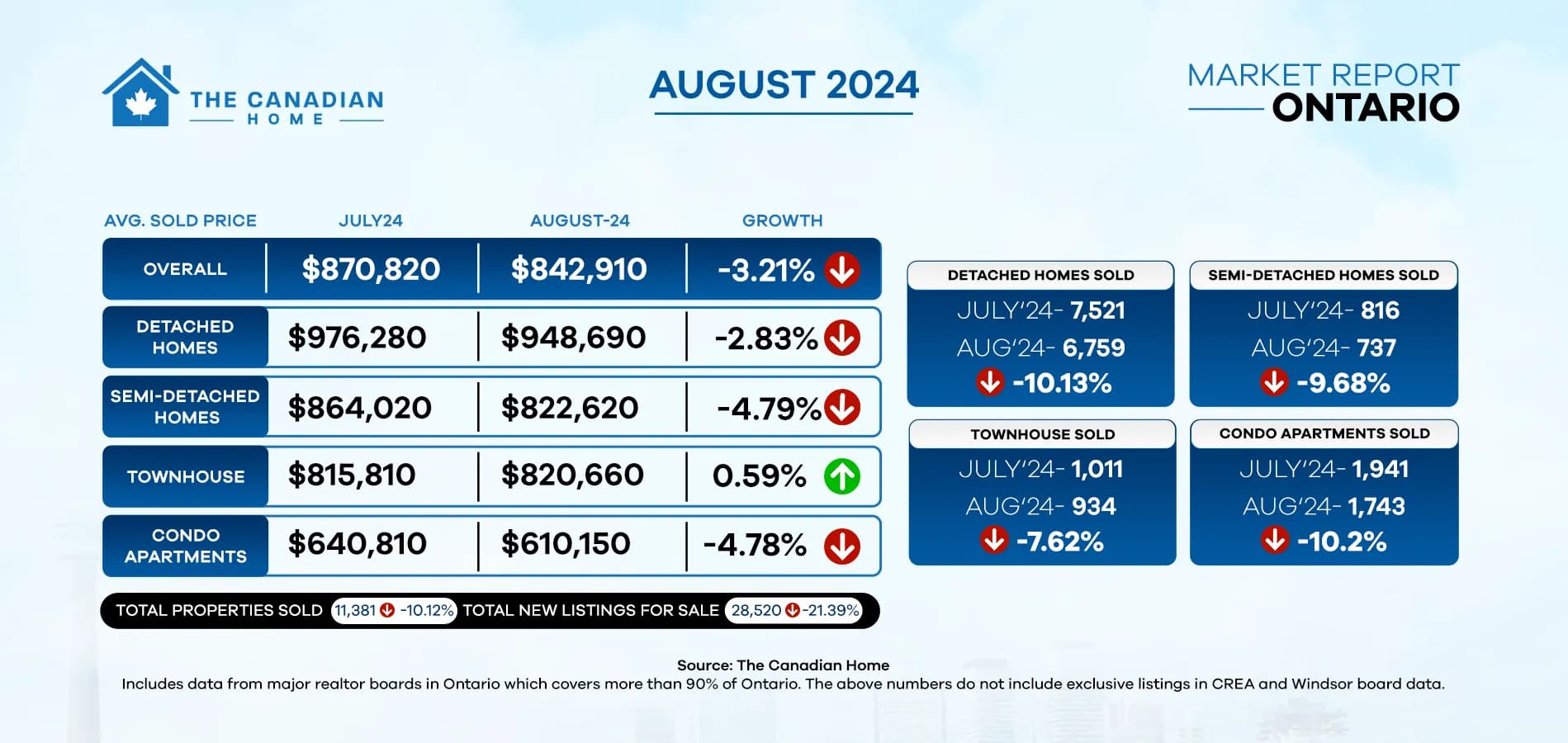
As you can see the Ontario housing market is presenting an intriguing opportunity for buyers. While average home prices have dropped by 3.2%, continuing a downward trend, the current interest rates offer a favourable environment for those looking to purchase.
However, the market is experiencing a puzzling slowdown. Transactions have declined by a substantial 10.1%, indicating a lack of demand that has consequently reduced available listings by 21.4%, raising the question: what is happening?
When we presented this question to our broker of record Manoj Karatha this is what he had to say “The problem is a lack of buyer motivation. See strictly speaking from a rate perspective lower interest rates are a good sign, but they don't automatically mean the housing market is booming. The rate cuts haven’t started to reflect on the ground. And with unemployment on the rise, it's just too expensive for most people right now."
That is the bottom line, buyers are hesitant to enter the market and grab the opportunity because of several reasons, which we are going to explore today.
WHY IS BUYER MOTIVATION DOWN?
Stable income, interest rates, job security, market conditions, and location are about a few things that need to be just right for a buyer to feel confident enough to buy a home. Unfortunately, current conditions, aside from interest rates, are generally not conducive to homeownership, with many factors trending negatively.
1. I LOST MY JOB ! -THE UNEMPLOYMENT FACTOR
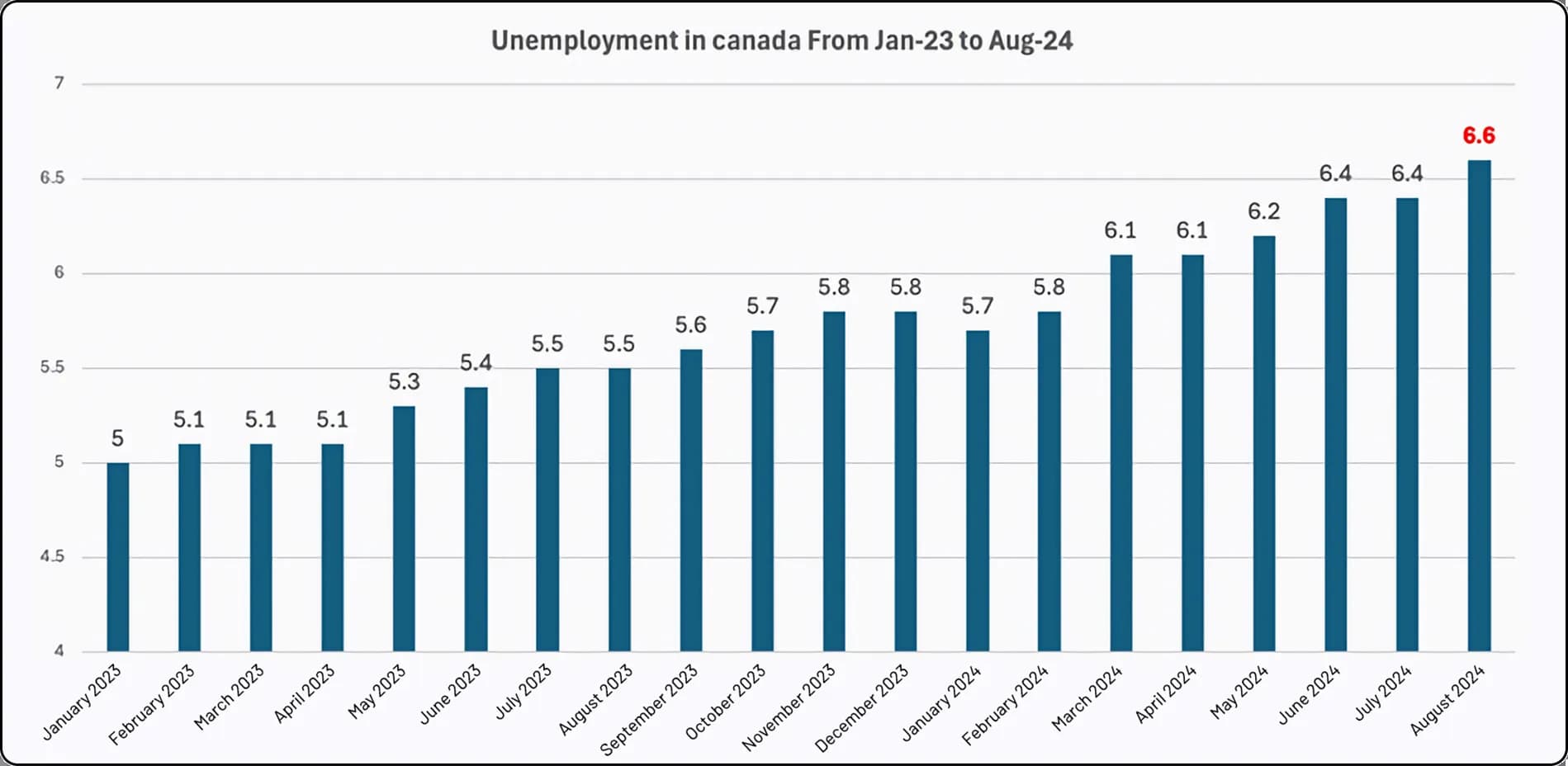
Since January 2023, Canada's unemployment rate has steadily increased, with only a few brief periods of decline. As of September 6, 2024, the unemployment rate stands at 6.6%, making it the second-highest among G7 countries.
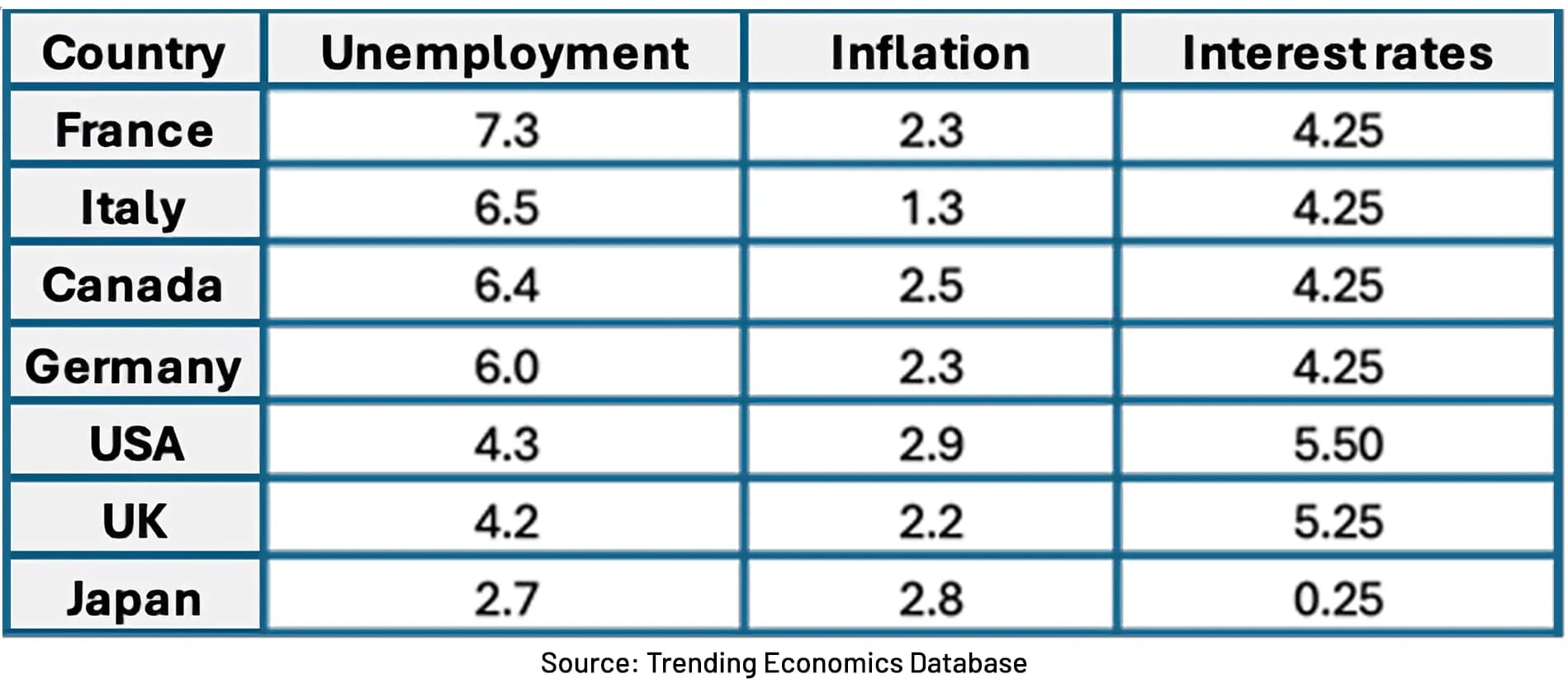
Canada’s rising unemployment rate is having a significant impact on the housing market. With approximately 2.55 million people out of work, there’s a noticeable decline in purchasing power, leading to fewer home purchases. This trend is reflected in the declining homeownership rate, which has decreased since its peak in 2011. Younger Canadians, particularly millennials, are feeling this impact the most, with a significant drop in homeownership rates among this age group. As a result, the number of renter households is growing at a much faster pace than the number of owner households.
2. ITS TOO EXPENSIVE-THE AFFORDABILITY ISSUE
The affordability crisis in Canada has reached alarming levels, with housing prices skyrocketing over 40% between 2018 and 2022. In 2024, homeownership in cities like Toronto and Vancouver requires an average income of $230,000 and $248,000, respectively—figures far beyond the reach of many Canadians. For context, the average household income in Canada is just $106,300 before taxes, and the median is even lower at $84,000. To put it in perspective, only the top 10% of households earn $255,000 or more annually as per Statistics Canada. As housing becomes increasingly unaffordable, it feels less like a basic right, as outlined in the 2019 National Housing Strategy Act, and more like a luxury.
3. WHERE ARE THE HOMES TO BUY? - HOUSING AVAILABILITY CRISIS
A key driver of Canada's housing crisis is the mismatch between population growth and housing supply. From 2013 to 2023, Canada’s population grew by approximately 450,000 people annually, yet only 200,000 housing units were built each year—no more than during the 1970s. Back then, nearly every new Canadian could expect a home to be built for them, but today, only one home is built for every two people. This shortage has left many Canadians, especially in urban cities, struggling to find housing that suits their needs. There’s a severe lack of suitable homes for young adults, couples starting families, retirees downsizing, and new immigrants seeking opportunities. Cities like Toronto, for instance, have one of the highest rates of adults in their prime family-formation year’s still living with their parents due to housing shortages.
The Canada Mortgage and Housing Corporation (CMHC) estimates that 3.5 million more homes are needed by 2030 to restore affordability. However, the distribution of these homes is crucial. Building homes in rural Manitoba won't ease the rental crisis in downtown Vancouver, where demand is highest. The most economically dynamic cities are not building homes quickly enough to meet demand, leading to skyrocketing prices. Restrictions on where multifamily homes can be built, along with regulations that make building mid-density housing such as triplexes too costly, exacerbate the issue. A deeper understanding of unmet demand is essential for governments and builders to provide housing where Canadians truly need it.
WHAT SHOULD WE DO?
Alright, so to summarize: Many Canadians are losing jobs, leading to a significant decline in income. Those with income are priced out of the market, and those barely above the affordability lines don't have enough homes available. If this were a game of chess, it would be checkmate.
That being said it's not all bad and the numbers prove it.
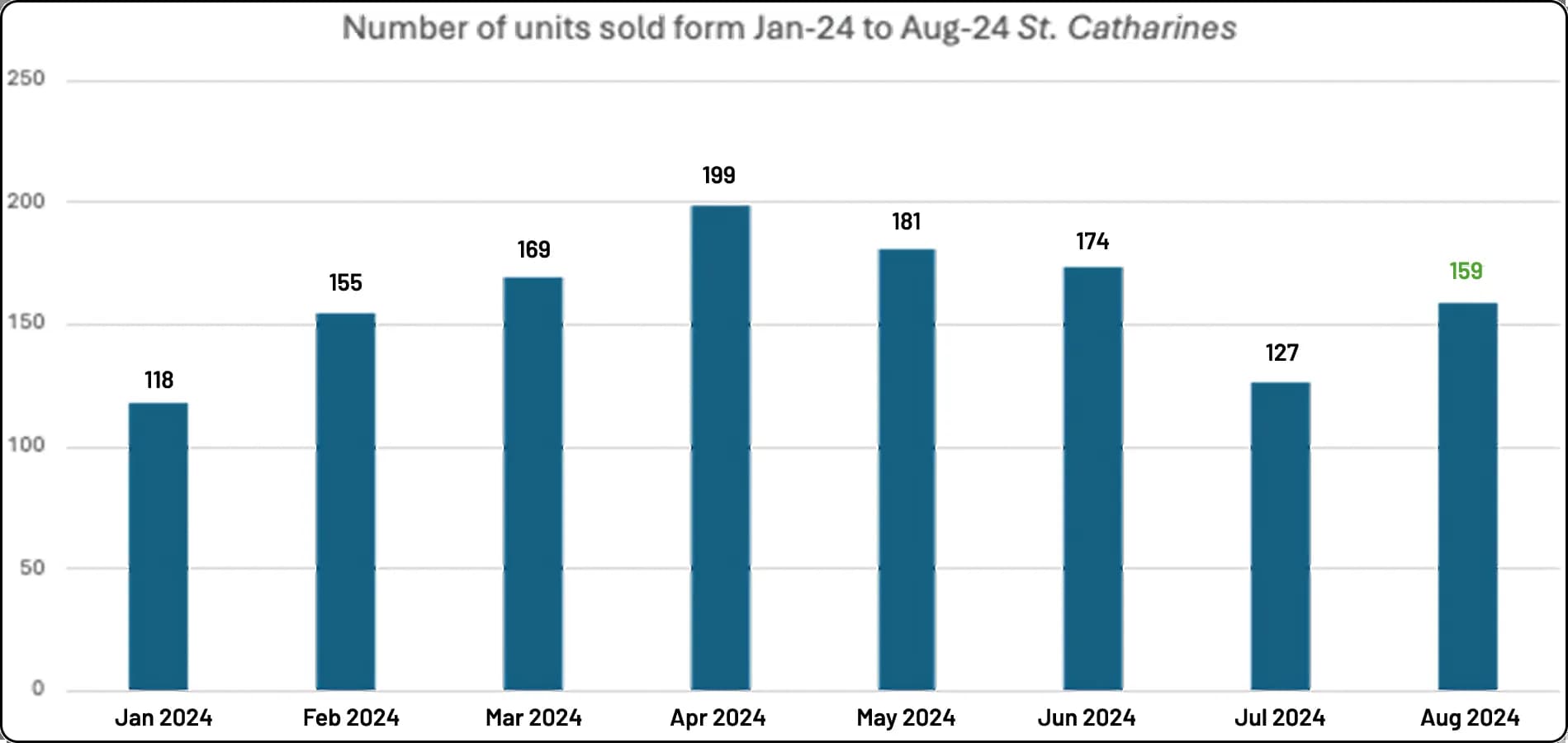
St. Catharines has emerged as a standout in Ontario's real estate market, experiencing a remarkable 23% increase in transactions month-over-month – the highest among five cities in the province. Despite a slight price decline of 5.46% in August 2024, following a 7% increase in July, St. Catharines remains an attractive option for homebuyers.
We believe this surge in interest is due to a perfect storm of factors: affordability, ample supply, and robust job opportunities. With an average home price of 646K, one of the lowest in Ontario, St. Catharines offers exceptional value. Coupled with its proximity to major cities like Toronto and a thriving job market, it's no wonder buyers are flocking to the area.
As Robin Cherian, CEO of The Canadian Home, puts it, "Homebuyers need to prioritize their location. If you're determined to buy in a major city like Toronto, it might be wise to wait until you're better prepared. However, cities like Hamilton, Oshawa, Kitchener offer a compelling alternative. Don't let the fear of missing out on a future opportunity prevent you from exploring these hidden gems."
As interest rates continue to decline, the decision for first-time homebuyers becomes increasingly complex. While lower borrowing costs offer affordability benefits, potential buyers must weigh the risks and rewards of entering the market now. The release of pent-up demand could lead to a surge in prices, making it a strategic gamble. Ultimately, whether to buy now or wait depends on individual risk tolerance and market expectations.


Blog Search
Popular Blogs
Popular Blogs
The trademarks MLS®, Multiple Listing Service® and the associated logos identify professional services rendered by REALTOR® members of CREA to effect the purchase, sale and lease of real estate as part of a cooperative selling system.